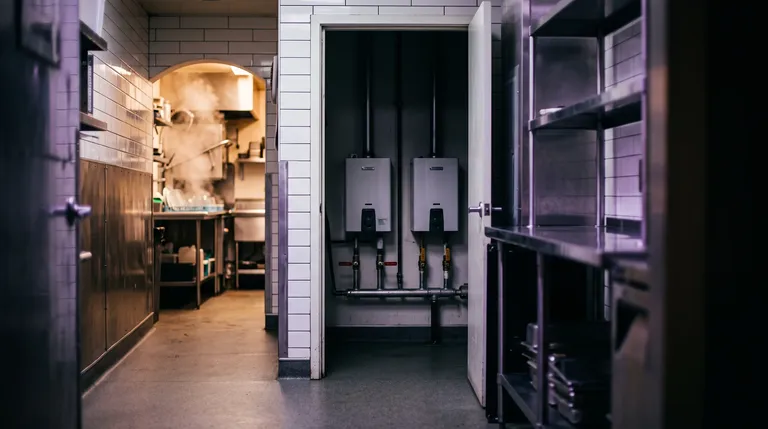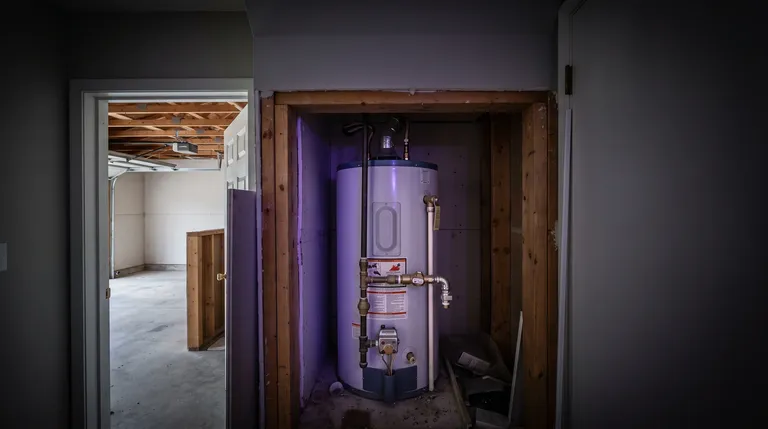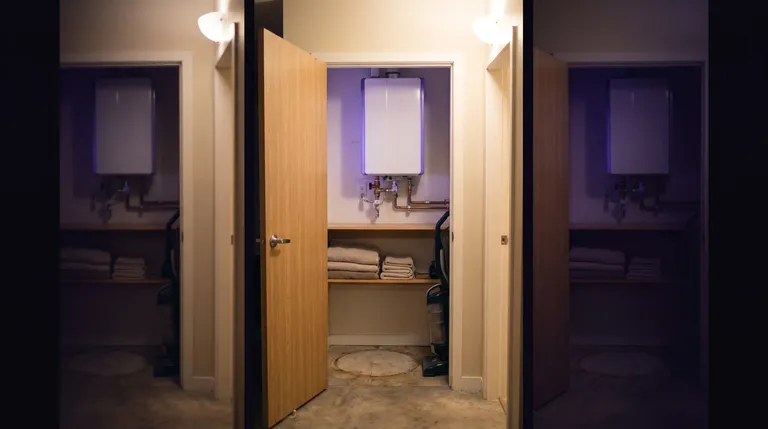

Tankless water heaters are sold on efficiency, endless hot water and a long service life. All three are true, and the third one has a condition attached that does not always get said clearly at the point of sale.
The condition is annual servicing, and unlike a tank — which will limp along neglected for years — a tankless unit that is not maintained degrades in ways that are difficult and expensive to reverse.
What is actually happening inside
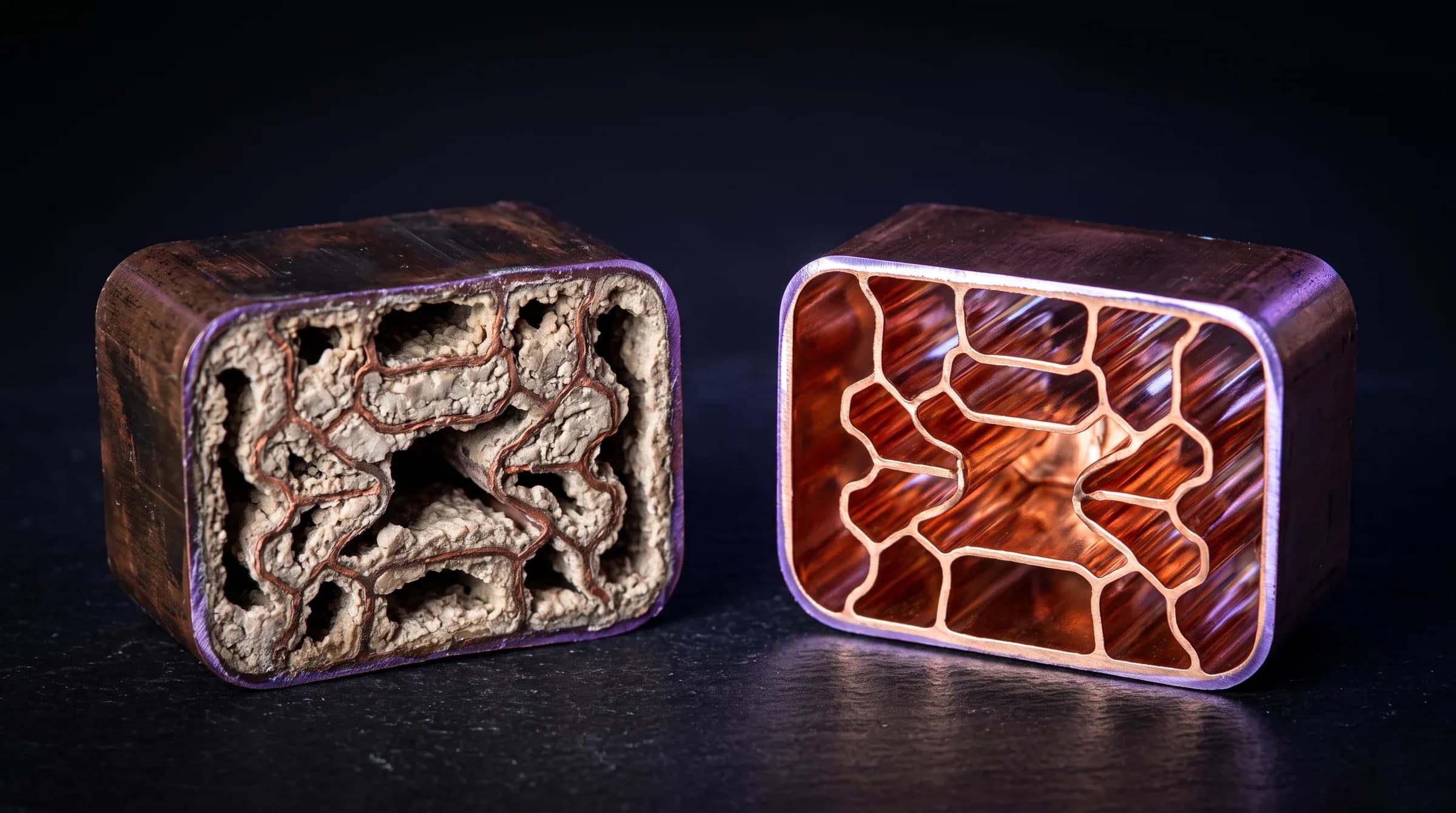
A tankless unit heats water very rapidly as it passes through a compact heat exchanger. That means high heat concentrated on a small surface area.
Dissolved minerals in water come out of solution when heated, and they deposit on the hottest surfaces. In a tank, that sediment falls to the bottom where it is a nuisance. In a tankless heat exchanger, it forms a hard scale directly on the surface doing the heating, in narrow passages.
Scale insulates. So the unit has to fire harder to deliver the same water temperature, which makes more scale, which makes it fire harder still. It is a compounding problem rather than a linear one.
What it looks like from outside
Reduced flow at a given temperature — the unit cannot heat as much water as it used to. Fluctuating temperature. The unit cycling or short-cycling. Error codes, particularly ones relating to flow or overheating. Longer waits for hot water. Noticeably higher gas consumption for the same use.
The frustrating part is that these appear gradually, and people adapt to them rather than reading them as a maintenance signal.
What descaling involves
A circulation pump is connected to the unit's isolation valves and a descaling solution is circulated through the heat exchanger for a period, dissolving the scale. The unit is then flushed clean.
The inlet filter screen is cleaned, which catches debris and is a common cause of flow problems on its own. The venting is checked. Combustion is checked, on a gas unit, which is the same safety requirement as any gas appliance. The condensate drain is checked on a condensing unit.
Isolation valves — check yours
Descaling requires isolation valves on the inlet and outlet of the unit, so the circulation pump can be connected without disturbing the plumbing.
A properly installed tankless unit has them. An installation that skipped them — and plenty did, particularly cheaper ones — makes every service more involved, because they have to be fitted before the unit can be serviced at all.
If you are having a tankless unit installed, confirm isolation valves are included. If you have one already and do not know, look: they are a pair of valves with service ports, immediately at the unit.
The warranty
Most manufacturers require documented annual maintenance for warranty coverage. A failed heat exchanger on a unit with no service history is a claim that gets refused, and a heat exchanger is the expensive part.
The cost of servicing across the warranty period is generally less than one denied major repair. That is the whole argument, and it is a straightforward one.
Can you do it yourself
Descaling kits exist and a technically confident owner can use one. Two caveats.
The first is that self-servicing does not usually satisfy a manufacturer's documentation requirement for warranty purposes — check yours before relying on it.
The second is that the combustion and venting checks are the safety half of the service, and they are not part of a descaling kit. A descale is not a service; it is one component of one.
When to book it
Annually. If yours has never been done, or you have moved into a house with a tankless unit of unknown history, that first service is worth booking as an assessment.
Doing it alongside a furnace service, if both are due, saves a visit.
The general point
Tankless is a good technology and we install a lot of it. The honest version of the sales pitch includes this article. A tankless unit that is maintained will outlast a tank comfortably. One that is not can fail sooner than the tank it replaced, and cost more to fix when it does.
Knowing that before you buy is what makes it a good decision rather than a disappointing one.
Vancouver, Burnaby, Richmond, Coquitlam, Port Coquitlam, New Westminster. 604-865-7979.
Related: Tankless descaling and maintenance · Tankless water heater installation · Tankless water heaters: who they suit