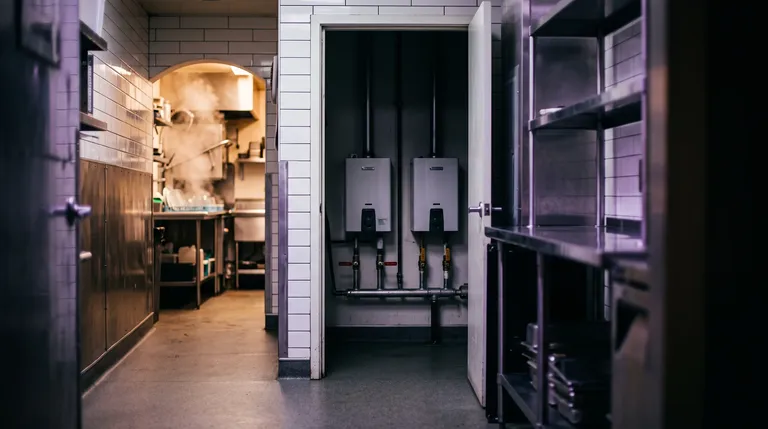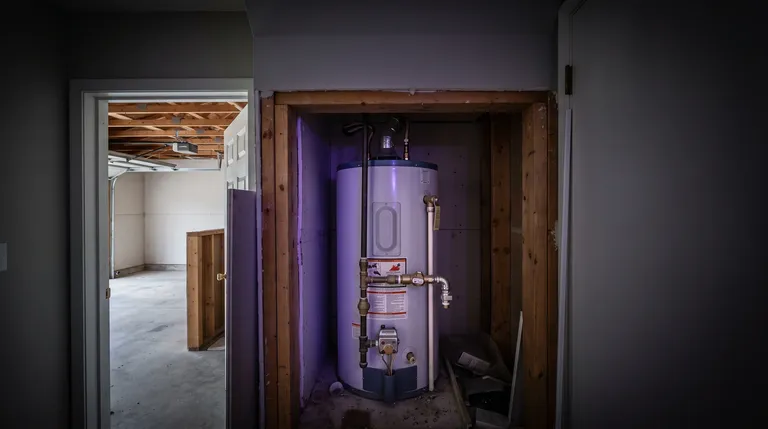
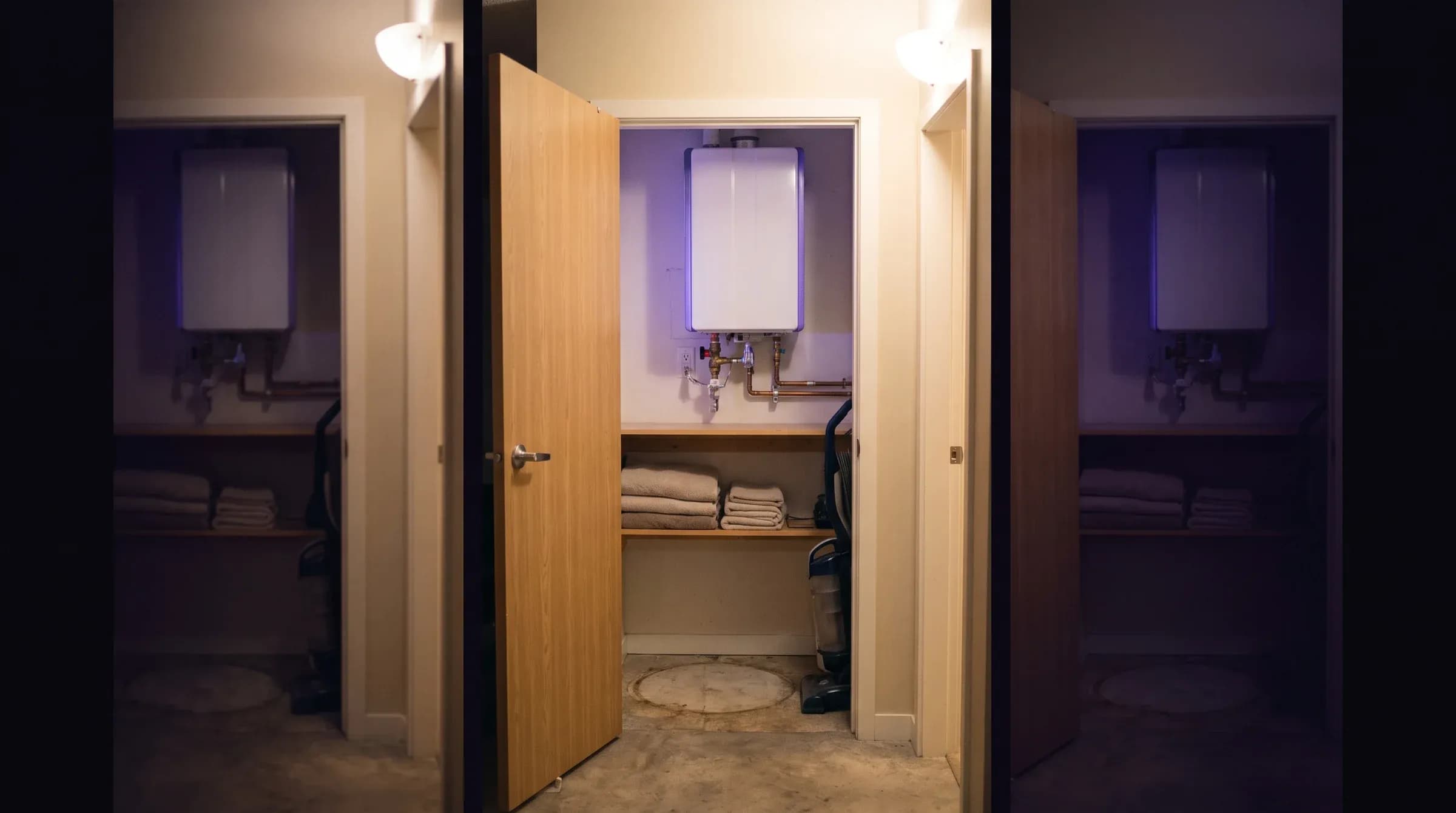

A tankless water heater heats water as it flows rather than storing it hot. No tank, no reservoir to run out, no standby losses from keeping water hot all day.
For the right home it is clearly better. For the wrong one it is an expensive way to acquire a new maintenance obligation. Here is how to tell which you are.
What you actually gain
You cannot run out. This is the headline and it is real. Long showers, consecutive showers, filling a deep bath — none of it exhausts a supply, because there is no supply.
Space. A wall-mounted unit instead of a floor-standing tank. In a condo, a townhouse or a small home that closet is worth having back.
No standby loss. A tank keeps water hot around the clock whether or not you use it. A tankless unit heats only what is drawn. In a household that uses hot water in concentrated bursts, that is a meaningful running-cost difference.
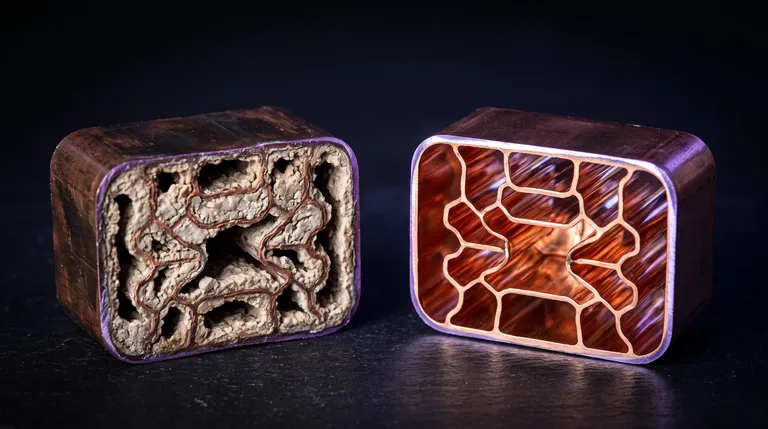
Longer service life, generally, than a tank — provided it is maintained. That last clause is doing a lot of work, and Why tankless water heaters need descaling, and what happens if they do not get it explains it.
No tank to fail catastrophically. A tank that corrodes through releases everything it holds. A tankless unit has no stored volume to release.
What you have to provide
Gas capacity. This is the one that most often decides it. A tankless unit heating water on demand needs substantially more gas flow when it fires than a tank does, because a tank heats slowly and continuously while a tankless heats quickly on demand.
Where the existing gas line was sized for a tank, it frequently needs upgrading — and if the run from the meter is long, that upgrade can be a significant part of the total cost. On a home where the whole system is already near its capacity, it may mean upstream work as well.
Establish this before you commit. It is the single most common cost surprise in a tankless conversion, and it is answerable in advance.
Venting. Tankless units vent differently from tanks and generally need their own vent, correctly routed and terminated. Reusing an existing tank vent is usually not an option.
Electrical. Even gas tankless units need power for controls and ignition.
Condensate drainage, on condensing units, which produce water as a by-product of their efficiency.
Annual maintenance. Not optional: descaling is what that longer service life depends on.
Where they struggle
Simultaneous demand. A tankless unit has a maximum rate at which it can heat water. One shower is comfortable. A shower plus a dishwasher plus a kitchen tap shares that capacity. Undersize it and you get the thing tankless is supposed to prevent — inadequate hot water, just for a different reason.
Size for your worst simultaneous demand, not your average one.
The wait at the tap. The unit has to detect flow, fire, and bring water to temperature. It is brief, but it is not instant, and if the run to the tap is long you are also clearing the cold water sitting in the pipe.
A recirculation arrangement addresses this and is worth discussing during design rather than after installation.
Very low flow. Some units will not fire for a very small draw — a trickle from a tap may not trigger it.
Hard water, which scales the heat exchanger. Less of a concern here than in many regions, but not zero.
The payback question
Tankless costs more to install than a tank, particularly once gas line work is included, and it costs less to run. Whether that pays back depends on your hot water usage, energy prices, and how long you stay in the house.
The honest framing is that if you are staying a long time, the arithmetic works and the space and endless-hot-water benefits are yours the whole time. If you might move in a couple of years, the payback is unlikely to complete and you should want it for the other reasons rather than the running cost.
Who should probably not
A household with heavy simultaneous demand and no appetite for a large unit. A home where the gas upgrade is disproportionate. Anyone who will not maintain it — an unmaintained tankless unit fails earlier than a tank would, and the warranty conversation is unpleasant.
And anyone replacing a failed tank in an emergency, with no hot water in the house, who does not have days to spare. Tankless is not a same-day swap.
Working it out
The questions to answer are: what is your simultaneous demand, what does your gas supply provide, where would the unit go and can it vent from there, and are you staying long enough for it to matter.
We can answer the middle two on a visit.
Vancouver, Burnaby, Richmond, Coquitlam, Port Coquitlam, New Westminster. 604-865-7979.
Related: Tankless water heater installation · Tankless descaling and maintenance · Combi boilers