
Commercial hot water is not simply residential hot water with a larger tank. The equipment differs, but the thing that actually changes the decisions is consequence.
When a water heater fails in a house, someone has a cold shower. When one fails in a restaurant, a salon, a care facility or a multi-unit building, an operation stops or a lot of people are affected at once.
That single difference reshapes everything.
Redundancy stops being a luxury
In a home, one water heater is normal. In a commercial setting, the question is what happens on the day it fails.
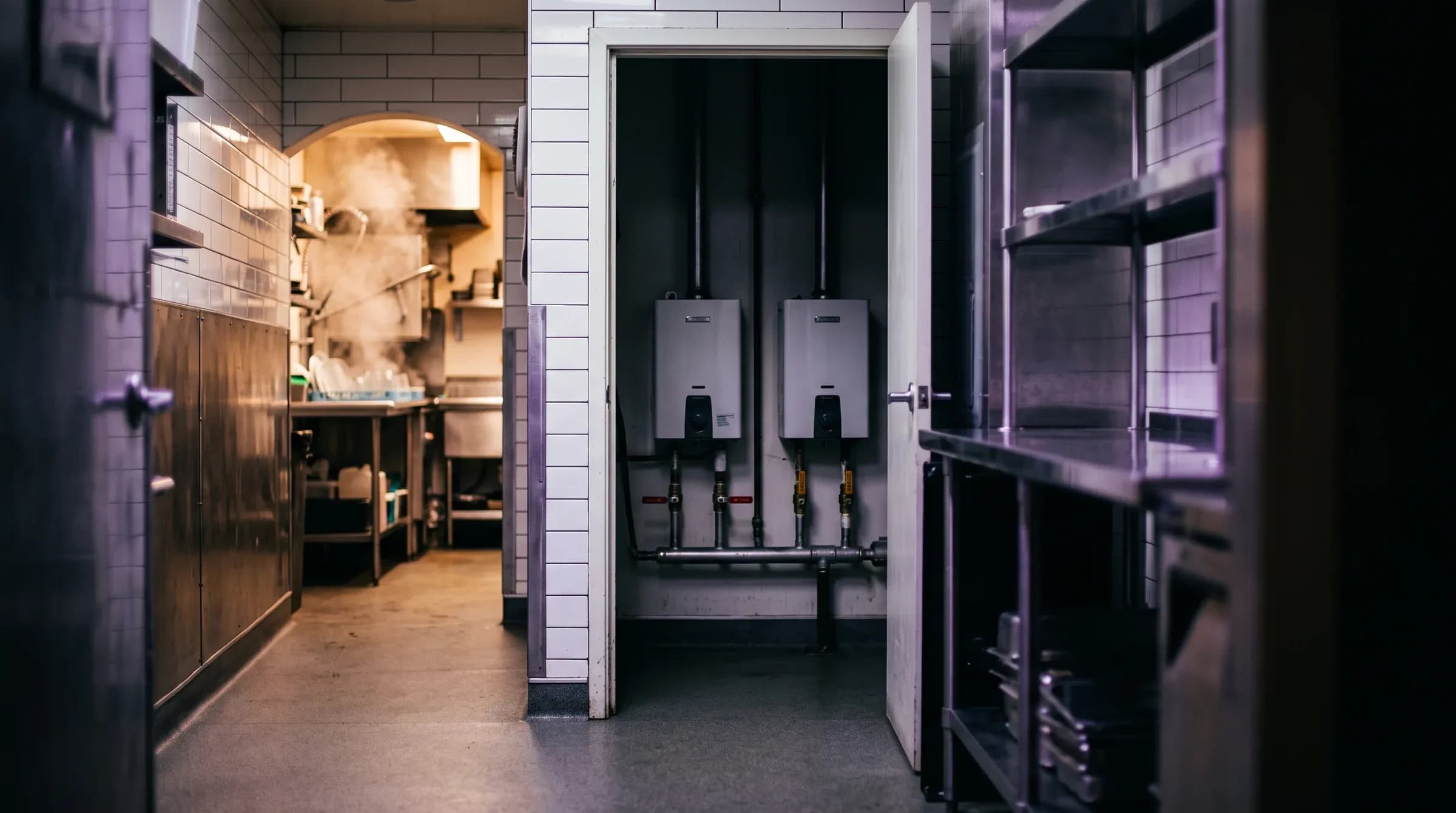
Multiple smaller units instead of one large one means a failure reduces capacity rather than eliminating it. You operate at reduced service instead of not operating. For a business where hot water is not optional — food service, personal care, healthcare, hospitality — that is usually the deciding argument, and it is worth more than the efficiency difference between configurations.
Demand patterns are sharper
Residential demand is a morning peak and an evening one. Commercial demand can be far spikier and far more specific: a restaurant's dish pit at service, a salon with several stations at once, a gym at shift change, a building where everyone showers in the same hour.
Sizing for a commercial application means understanding the actual pattern, not applying a rule of thumb. Undersizing produces a business that runs out during its busiest period, which is precisely when it cannot afford to.
Recovery rate matters more than storage volume in most spiky applications.
Temperature requirements can be set by someone other than you
Some commercial applications have hot water temperature requirements set by health regulations or by equipment specifications — commercial dishwashers being the common case.
Where that applies, the temperature is not a comfort preference. It is a compliance requirement, and it needs to be delivered reliably and often demonstrably. That changes both the equipment and the monitoring.
This is worth establishing with your health authority or your equipment supplier rather than assuming, because the requirement varies by application.
Maintenance is scheduled, not reactive
The residential pattern is to do nothing until something fails. That is tolerable at home and it is not tolerable in a business, because the failure lands during operation.
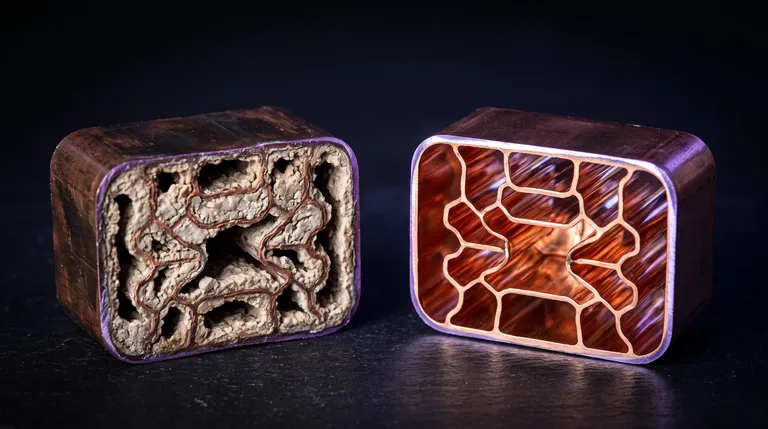
Commercial hot water equipment should be on a maintenance schedule — servicing, descaling where applicable, safety checks — planned for times that do not conflict with operating hours. The cost of scheduled maintenance is trivial against the cost of a closed day.
Strata and multi-unit buildings
Multi-unit residential brings its own set of questions. Whether hot water is central or per-suite. Who owns which part. How work is scheduled when it affects many residents. How and when notice is given, which is usually governed by the strata's own rules.
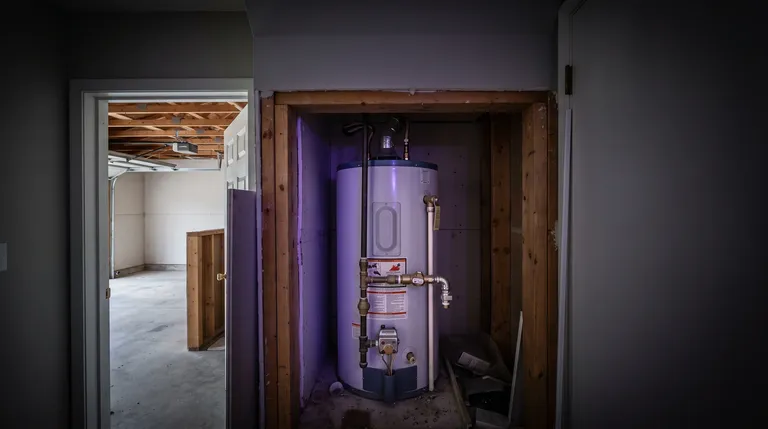
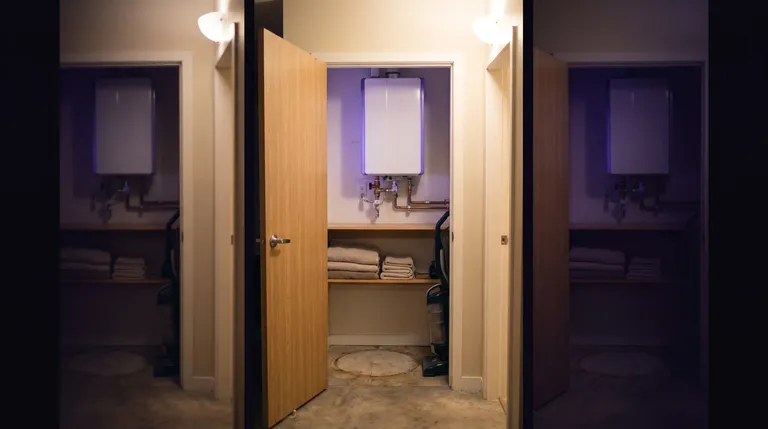
Access is frequently the hardest logistical part rather than the plumbing — service elevators, booking windows, getting equipment through a building that was not designed to have equipment moved through it. A common condo job with an uncommon complication is simply getting a tank out of a hallway closet and into a service elevator.
Planning the replacement before it is urgent
The residential pattern of replacing a water heater when it fails is bad in a commercial setting. An emergency replacement means taking whatever can be installed immediately, at whatever disruption the timing imposes.
Planned replacement means choosing the configuration, scheduling around your operation, and doing any associated work — gas capacity, electrical, venting, drainage — properly rather than in a hurry.
If your commercial equipment is old, the useful step is an assessment now that tells you where you stand and what a replacement would involve, so that when the time comes it is a scheduled project.
If you run a business with hot water demand
Tell us what the operation is and what the peak looks like. That is more useful than the size of the existing equipment, because the existing equipment may have been wrong.
Vancouver, Burnaby, Richmond, Coquitlam, Port Coquitlam, New Westminster. 604-865-7979.
Related: Commercial water heaters · Condo and high-rise plumbing · Hot water tank replacement