
A heat pump water heater is an electric tank with a heat pump on top. Instead of using electricity to generate heat directly, it uses electricity to move heat from the surrounding air into the water.
Because moving heat takes far less energy than making it, it uses a fraction of the electricity a standard electric tank does for the same hot water. That is the entire appeal, and it is a large one.
The conditions attached are all about where it can live.
It needs air, and it takes heat from that air
The unit draws heat from the space around it. That has two consequences that decide most installations.
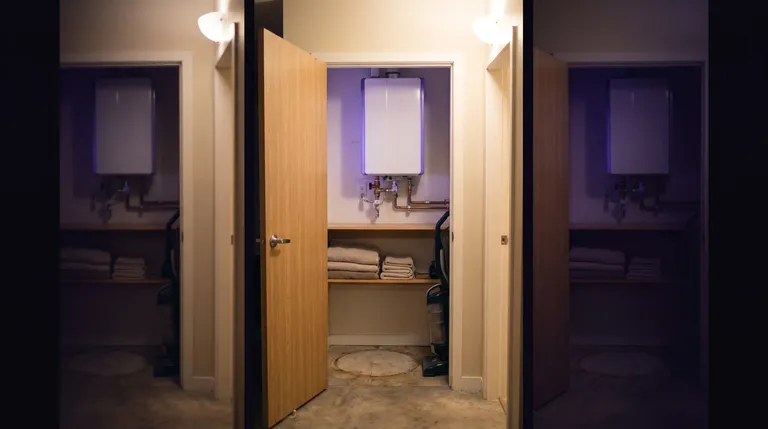
It needs a reasonable volume of air. A heat pump water heater in a small sealed closet will exhaust the available heat and lose efficiency. Manufacturers specify a minimum space, or ducting to bring air in and out.
It cools and dehumidifies the space it is in. This is the part people do not anticipate. The unit takes heat out of the surrounding air, so that air gets cooler.
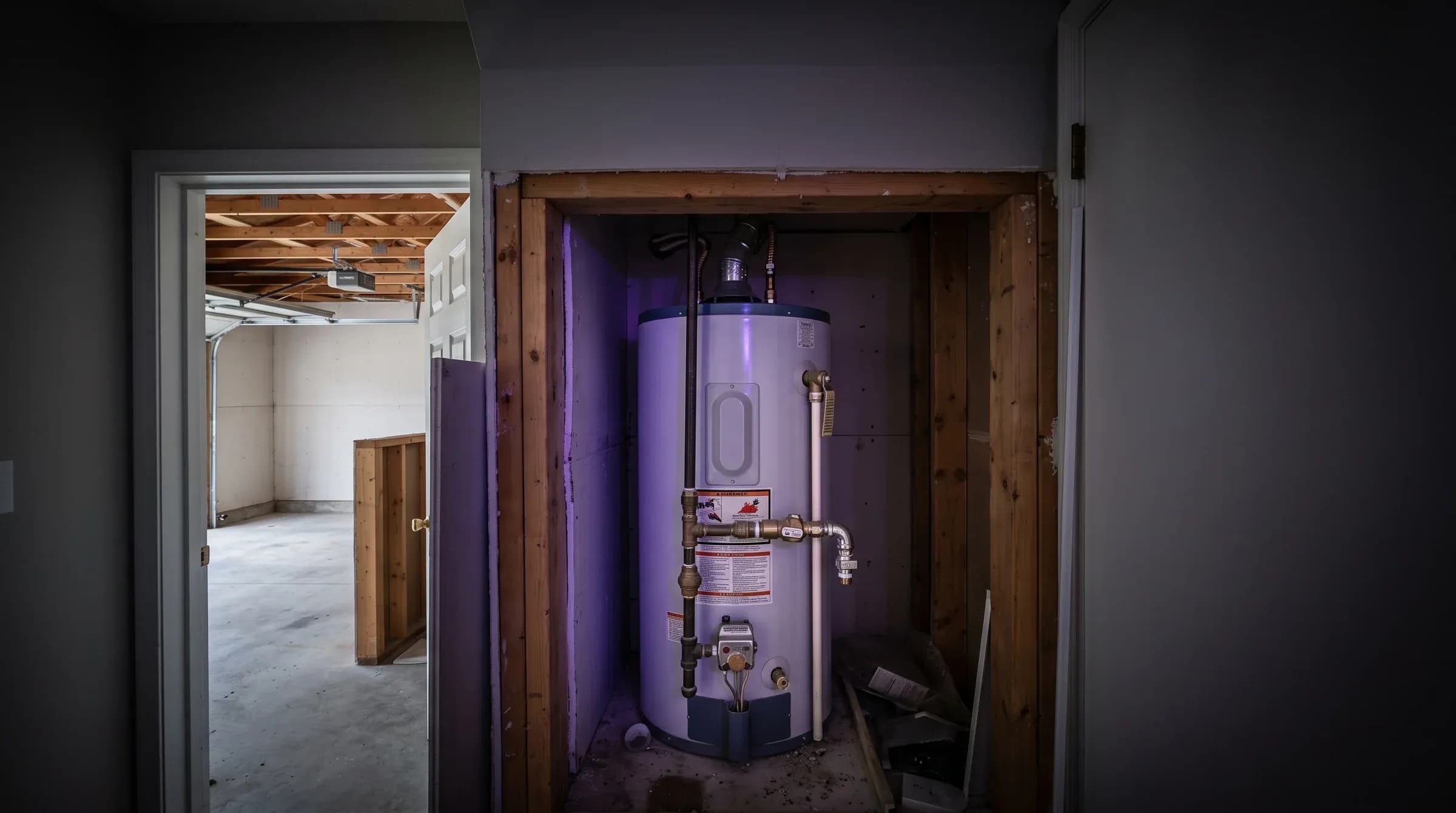
In a garage, an unfinished basement or a utility room, that is fine and sometimes welcome. In a small interior closet next to a living space, it is a problem — you are cooling part of your house to heat your water, which the heating system then has to make up.
The temperature of the space matters
The unit is extracting heat from air, so it works best when there is heat to extract. A garage that stays reasonably warm year-round is a good location. A garage that gets genuinely cold in winter is a worse one — the unit becomes less efficient exactly when you want hot water most.
Most units switch to a conventional electric element when conditions are unfavourable, so you still get hot water; you get it at standard electric tank efficiency for that period.
In Metro Vancouver's climate this is a smaller concern than in colder parts of Canada, but the location still matters.
Noise
There is a fan and a compressor. It is not loud, and it is comparable to a household appliance running — but it is not silent, which a conventional tank essentially is.
A garage or basement location makes this irrelevant. A closet sharing a wall with a bedroom does not. Worth thinking about before installation rather than after.
Condensate
Pulling heat out of air produces condensation, exactly as an air conditioner does. That water has to drain somewhere.
A location with an existing drain is straightforward. One without needs a condensate pump or a routed drain line, and that is a real installation consideration rather than an afterthought.
Electrical
Heat pump water heaters need appropriate dedicated electrical supply. If you are replacing a gas tank, this is new electrical work, and depending on your panel it may require an upgrade.
That is the second most common cost surprise on this conversion, after the space question.
The dehumidifying side benefit
In a damp basement or a crawlspace-adjacent utility area — which describes a great many Metro Vancouver homes — a unit that removes moisture from the air is doing something you might otherwise pay a dehumidifier to do.
For some houses this is a genuine secondary benefit rather than a footnote.
Rebates
Heat pump water heaters are covered by provincial and utility efficiency programmes, and those programmes change — amounts, eligibility, required equipment, whether pre-approval is needed. Check CleanBC and BC Hydro directly for what currently applies.
Some programmes require application before work begins, which is a reason to consider this before your existing tank fails rather than during.
Who it suits
A home with a garage, an unfinished basement or a large utility room; electric hot water already, or a willingness to do the electrical work; a drain or a route for condensate; and an owner staying long enough to collect the running-cost saving.
Who it does not
A small interior closet with no air volume and no drain, in a home where the electrical panel is already at capacity, replacing a gas tank that has years of life left.
Working it out
The location question answers most of this. If you can tell us where your current tank is and what kind of space it is in, we can usually tell you on the phone whether this is worth pursuing.
Vancouver, Burnaby, Richmond, Coquitlam, Port Coquitlam, New Westminster. 604-865-7979.
Related: Heat pump water heaters · Hot water tank replacement · Heat pumps in Metro Vancouver