
Most furnaces get replaced in January, on the coldest week of the year, by someone who had no intention of replacing a furnace that month.
That is the expensive way to do it, and it is avoidable, because a furnace approaching the end almost always says so first.
The signals
It has needed repairs in consecutive seasons. One repair is maintenance. Two winters running is a pattern, and the third repair is usually the one where you wish you had decided earlier.
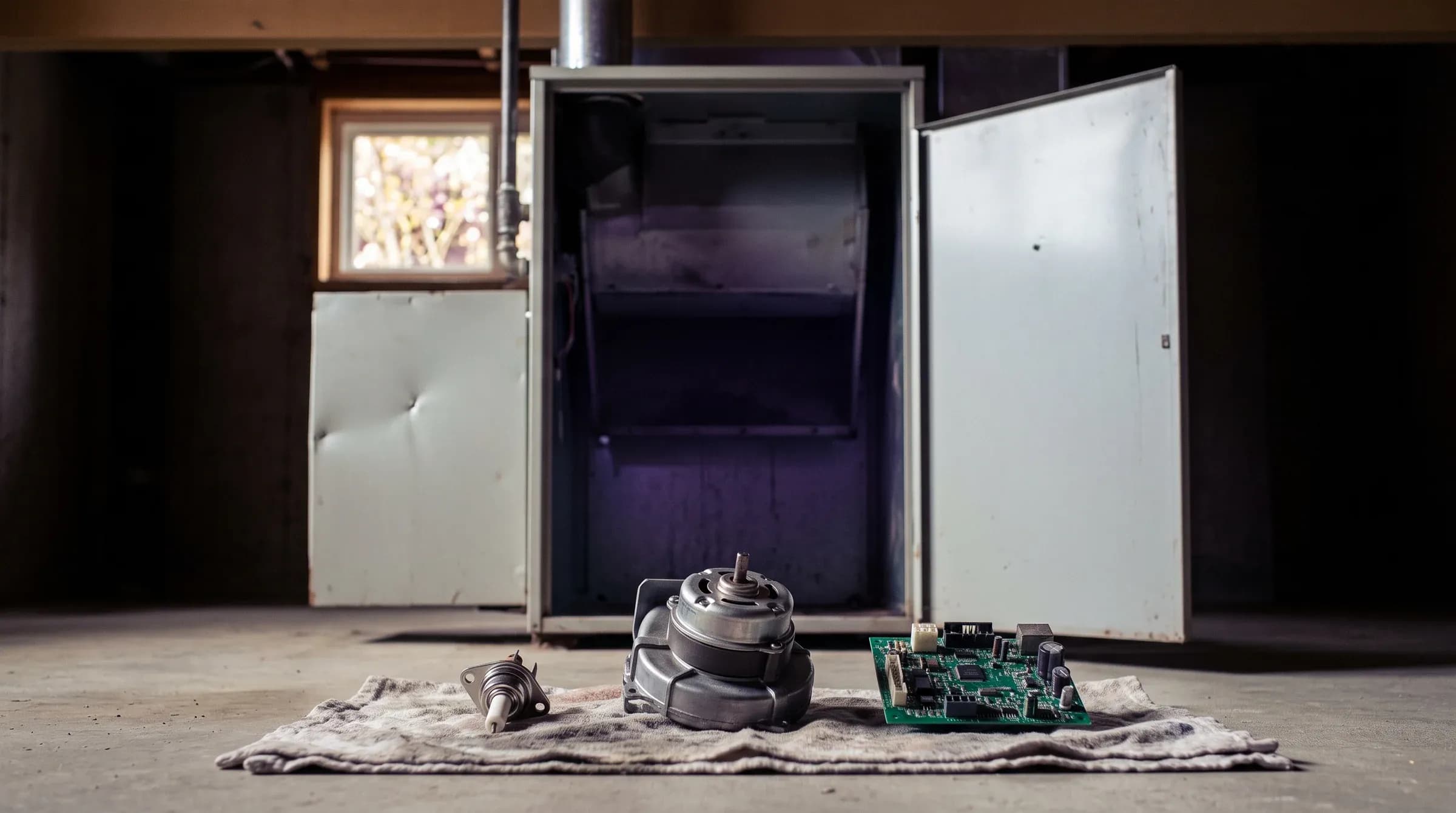
Parts are getting harder to find. When a technician tells you a component is discontinued or has to be ordered in, that is a manufacturer telling you the unit is old. It also means the next failure comes with a wait, in the cold.
Rooms that used to be comfortable no longer are. Uneven heat across a house can be a ducting or balancing problem, but on an old system it is often the furnace losing its ability to move and heat air adequately.
It runs constantly in weather that never used to bother it. Efficiency declines with age and wear. A system that used to cycle now runs and runs.
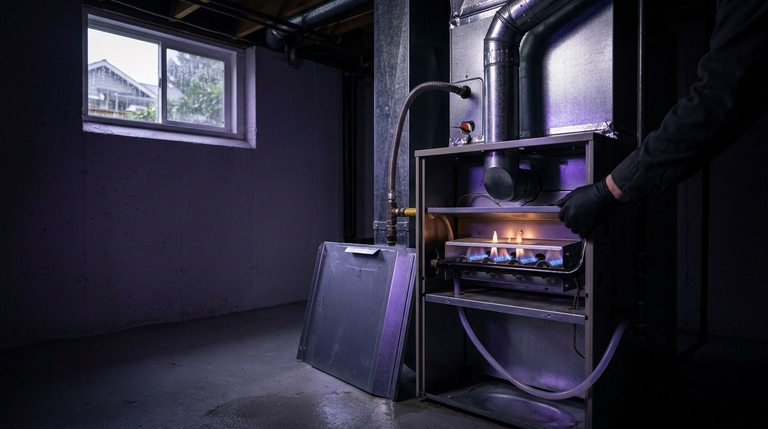
The heat exchanger has been flagged. This one is not a judgement call. A cracked heat exchanger is a combustion safety issue, and it ends the conversation about repair.
It is simply old. Every furnace has a service life, and past a certain point you are maintaining something that owes you nothing. A technician who has looked at yours can tell you where it sits.
Why the timing matters so much
You get a choice. In an emergency you take what can be installed today. In spring you can compare equipment, sizes and configurations, and choose what actually suits the house rather than what is on the truck.
You get better scheduling. Heating contractors are flat out from the first cold snap. Outside that window there is time to do the job carefully — proper load calculation, proper ducting decisions, proper commissioning.
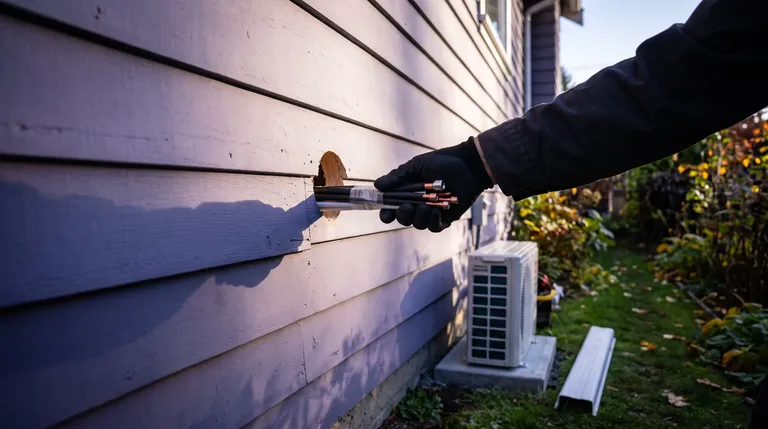
You can combine work. If the water heater is also old, or the gas line needs attention, or you are considering a heat pump, doing those together while equipment is out and connections are open is substantially cheaper than doing them separately.
Rebate programmes take time. Provincial and utility programmes for efficient heating equipment exist and change periodically. Some require pre-approval, some require specific equipment or contractors, and all of them take longer than an emergency install allows. Check CleanBC and BC Hydro for what is current — the programmes and their conditions change, so go to the source rather than relying on what anyone told you last year.
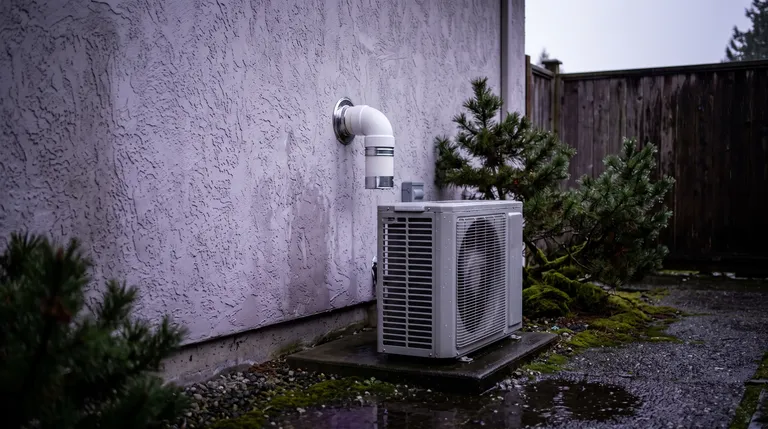
And you can consider alternatives properly. The genuine question now is not only which furnace, but whether a heat pump, or a heat pump alongside the furnace, suits your home better. That is not a decision to make in a panic in February.
Sizing, which is where installs go wrong
The most common defect in a furnace installation is a unit that is too large for the house. It is an easy mistake — bigger sounds safer — and it produces a system that heats quickly, shuts off, cools, and starts again. Short cycling wears equipment, wastes fuel and heats unevenly.
A proper installation starts with a heat loss calculation for your actual house: its size, insulation, windows, exposure. Not a rule of thumb, and not "the same size as the old one," because the old one may have been wrong and your house may have been insulated since.
If a quote does not mention how the size was determined, ask.
The ducts matter as much as the box
A new furnace connected to undersized, leaky or badly balanced ducting will underperform, and the homeowner will blame the furnace.
If some rooms have never been comfortable, replacement is the moment to look at the distribution rather than only the equipment. Sealing and correcting ducts while the system is apart is far cheaper than revisiting it later.
Permits
Furnace replacement requires permits in Metro Vancouver municipalities. We pull them and they are part of the work. A quote that is notably cheaper because permits are not mentioned is not cheaper — it is incomplete, and it creates a problem when you sell.
If yours is on the list
If two or more of the signals above describe your furnace, get it assessed while it is still working. The assessment tells you where you actually are, and knowing that in April is worth a great deal more than finding out in January.
Vancouver, Burnaby, Richmond, Coquitlam, Port Coquitlam, New Westminster. 604-865-7979.
Related: Furnace installation · Heat pump installation · Dual-fuel heating