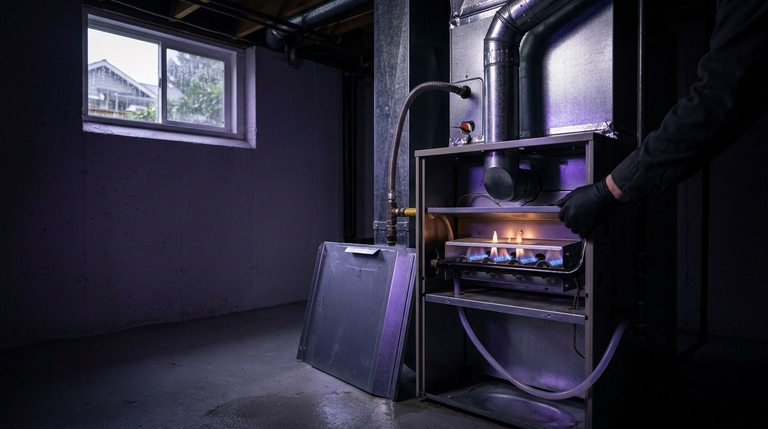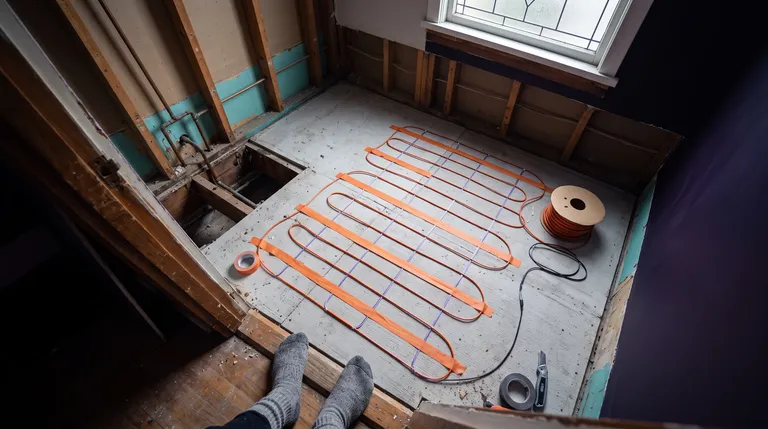

A great many Metro Vancouver homes have no ductwork. Older houses with baseboard heat, homes with hot water radiators, condos, basement suites, additions built onto houses that were never designed for them.
For all of those, adding a conventional ducted system means finding room for ducts in a finished building — which usually means soffits, dropped ceilings and lost closet space, if it is possible at all.
Mini-splits skip that problem entirely.
How they work
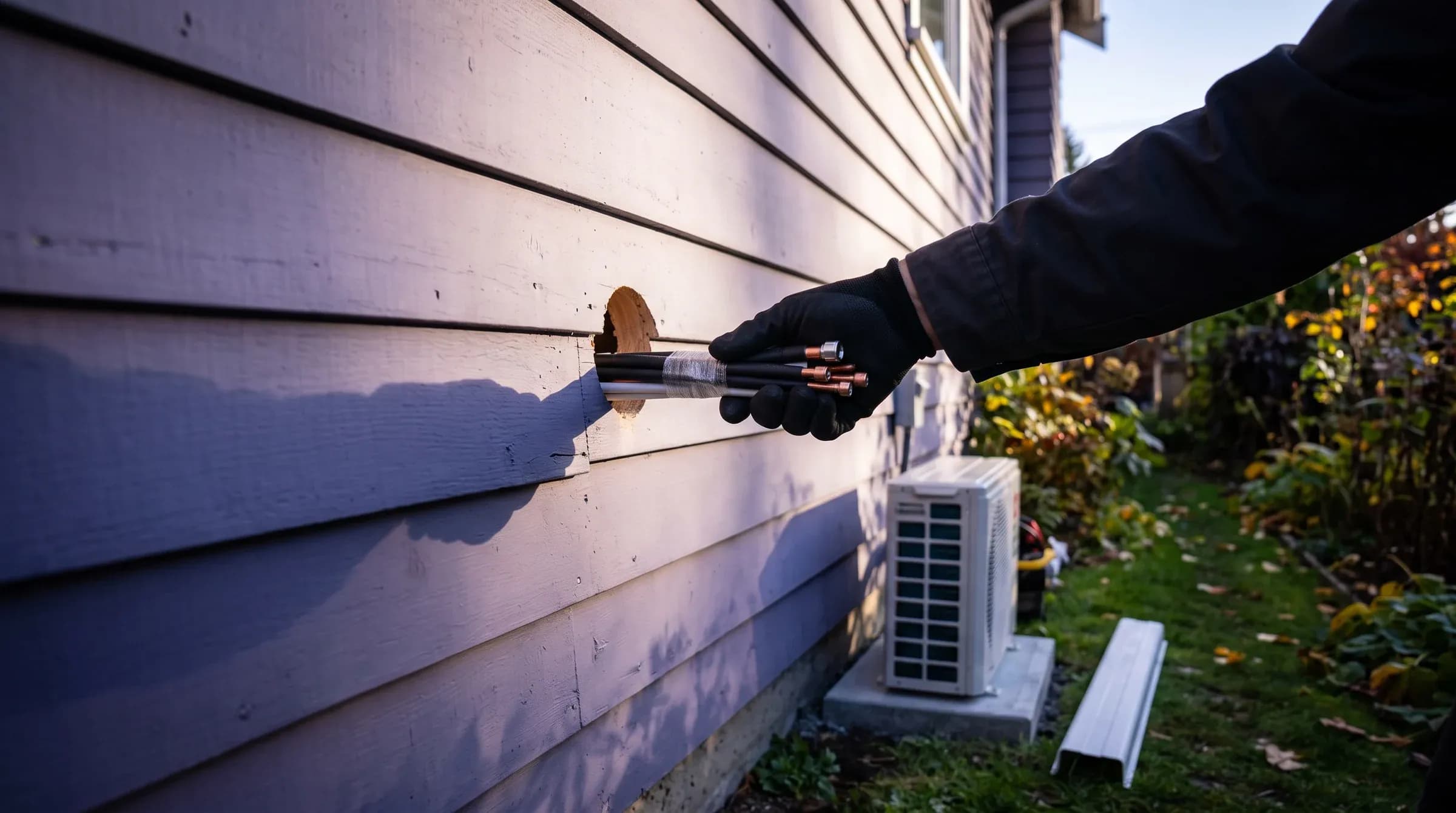
An outdoor unit connects to one or more indoor heads by a small bundle of refrigerant lines, a drain and electrical wiring. That bundle passes through a hole in the wall roughly the size of a fist. No ducts anywhere.
Each indoor head heats and cools the space it serves. It is a heat pump, so it does both, and each head can be controlled independently.
Where they suit
Homes with no ducts, which is the primary case.
Basement and laneway suites, where you want separate control and separate comfort from the main house — and where a tenant controlling their own temperature is worth something to everyone.
Additions and conversions, where extending an existing system would be difficult but a single head is straightforward.
Rooms the main system never handles well — the bedroom above the garage, the west-facing room that overheats every summer afternoon, the converted attic.
Condos, subject to the constraint below.
Zoning. Because each head is controlled separately, you heat and cool the rooms you are using. For a household that lives in part of the house most of the time, that is a real saving.
The condo constraint
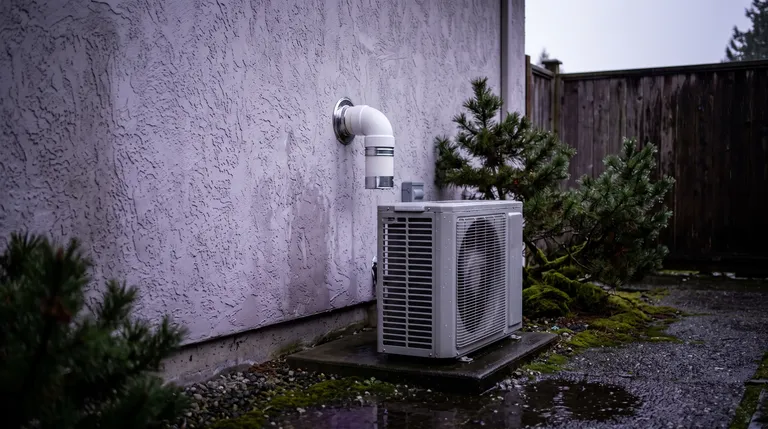
The outdoor unit has to go somewhere, and in a strata that requires approval. Some buildings permit it in defined locations, some have a process, some do not allow it at all.
Find out what your building's position is before you plan anything. It is the single most common reason a mini-split project stops.
The trade-offs
Appearance. The indoor heads are visible. Wall-mounted units are the most common and the least expensive, and they are a visible object high on a wall. People who mind this mind it a lot.
There are alternatives — ceiling cassettes recessed into the ceiling, floor-mounted units that sit low like a radiator, and concealed ducted heads that feed a short run of duct to serve two nearby rooms. Each costs more than the standard wall unit, and each solves the appearance problem to a different degree.
Heating room by room, not house-wide. A head heats the space it is in and the spaces air can move to. It does not push heat down a hallway into a closed bedroom. A home with many small closed rooms needs more heads, and cost rises with head count.
Outdoor unit siting and noise. Same considerations as any heat pump. Where it goes affects both your neighbours and your own bedroom windows.
Condensate drainage. Indoor heads produce water when cooling, and that has to drain somewhere. It is routine, but it has to be planned rather than improvised — a poorly routed condensate line is a slow leak inside a wall.
Single-zone or multi-zone
Single-zone is one outdoor unit to one indoor head. Simple, efficient, and the natural choice for a suite or a single problem room.
Multi-zone connects several indoor heads to one outdoor unit. It saves outdoor space and looks tidier. The trade is that the heads share one compressor, so their operation is linked in ways that occasionally matter, and a fault in the outdoor unit takes all of them out.
For two or three heads in one dwelling, multi-zone usually makes sense. For a suite that should be independent from the main house, separate single-zone systems often make more sense despite the extra outdoor unit.
Electrical
Each system needs appropriate electrical supply, and multi-zone systems need more. Panel capacity is worth checking early — it is the item most likely to change the budget.
Rebates
Heat pump rebate programmes generally include ductless systems, with their own conditions. Check CleanBC and BC Hydro for current terms, and check before starting, since some require pre-approval.
Deciding
The useful first questions are: how many rooms genuinely need conditioning, are they open to each other or closed off, where can an outdoor unit go, and — if you are in a strata — what will the building allow.
Answer those and the system almost designs itself.
Vancouver, Burnaby, Richmond, Coquitlam, Port Coquitlam, New Westminster. 604-865-7979.
Related: Ductless mini-splits · Heat pump installation · Condo and high-rise plumbing