
Radiant floor heating is the kind of thing people experience once in someone else's bathroom and immediately want. Warm floors, no draughts, no blowing air, no radiators taking up wall space.
It is genuinely excellent. The question is almost always about when it can be installed, not whether it is good.
Two different systems
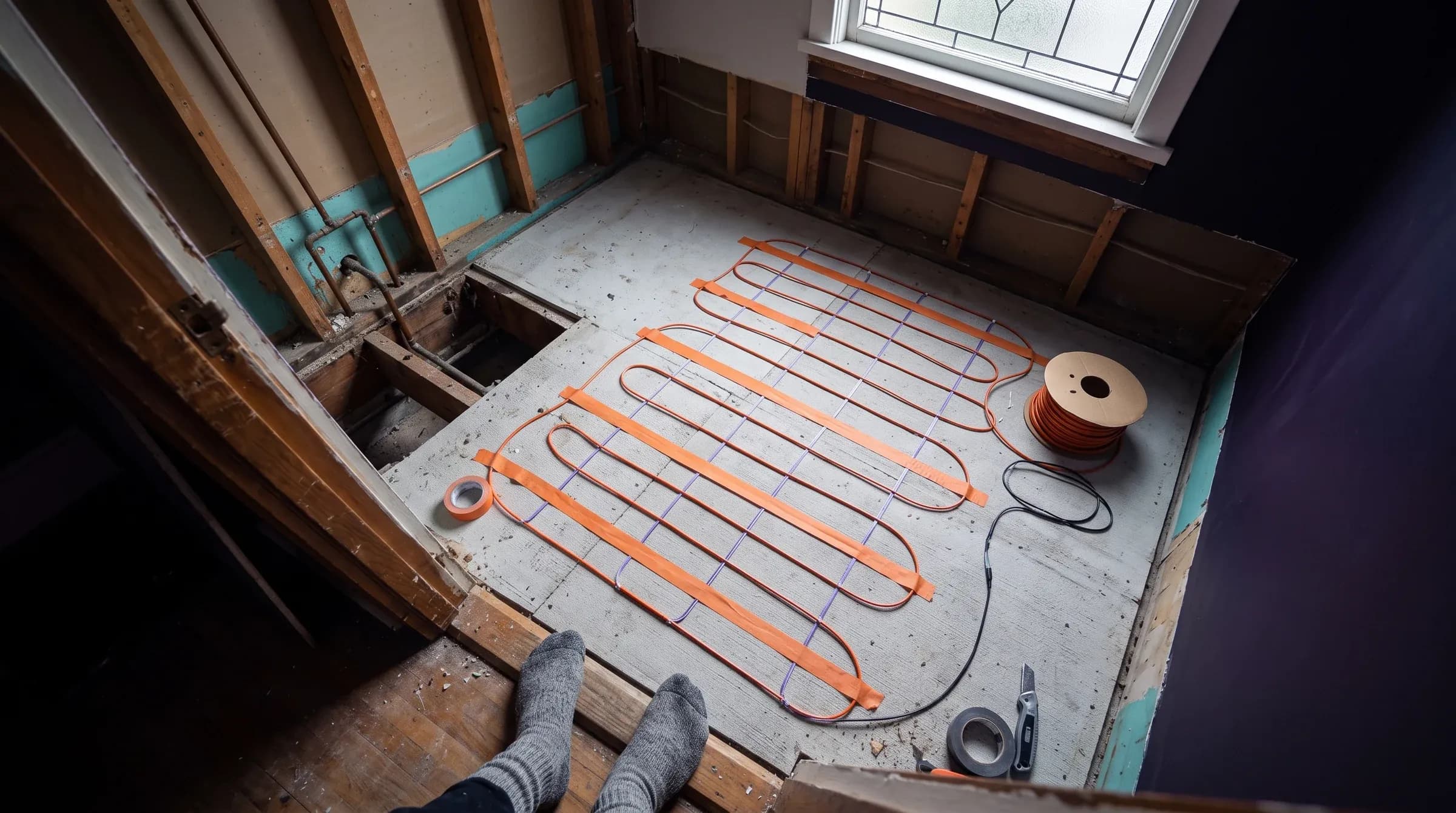
Electric uses heating cable or mats under the floor finish. It is thin, it adds little height, and it is straightforward to install in a single room during a renovation. Running cost is electricity, which makes it well suited to small areas — a bathroom floor, an entry — and poorly suited to heating a whole house.
Hydronic circulates warm water through tubing in or under the floor, fed by a boiler or a heat pump. It costs more to install and it is far cheaper to run at scale, which makes it the whole-home option.
The rule of thumb: electric for a room, hydronic for a house.
Why it feels different
Conventional heating warms air, which rises, circulates and stratifies — warm at the ceiling, cool at the floor, with movement you feel as draught. Radiant heats surfaces and the objects in the room, from the floor up.
The practical effects are that the floor is warm where you actually are, the temperature is even across the room, there is no air movement blowing dust around, and it is silent. People with allergies frequently notice the last two.
Radiant is also slow. It takes a while to bring a floor up to temperature and a while to cool. That is a feature for steady heating and a nuisance if you want a room warm quickly, which is why it is usually run continuously at a set point rather than turned up and down.
Floor coverings matter
Tile and stone are ideal — they conduct well and they store heat.
Engineered wood is generally fine, with attention to the manufacturer's temperature limits. Solid hardwood is more particular: wood moves with heat and moisture, and there are constraints on species, thickness and temperature. Check the flooring manufacturer's position before committing, because they set the terms of their own warranty.
Carpet and thick underlay insulate, which is the opposite of what you want. Thin carpet over radiant works; deep pile with heavy underlay largely defeats it.
The retrofit question
This is where the honest answer disappoints people.
During a renovation where the floor is coming up anyway, it is straightforward. Electric mat in a bathroom being retiled is an easy addition and the incremental cost is modest. If you are already redoing a floor, this is the moment — the only moment, realistically.
Into an existing floor with no renovation is the hard case. It means lifting the floor, which usually means the floor is being replaced regardless.
From below, where there is an accessible basement or crawlspace, hydronic tubing can sometimes be installed between the joists from underneath. It works, it avoids disturbing the finished floor, and it is less efficient than tubing in the floor assembly, so it suits some rooms better than others. Whether it is possible depends entirely on access and on what is already in that joist space.
New construction is where hydronic radiant makes the most sense — designed in from the start, correctly zoned, with a heat source chosen for it.
Pairing with a heat pump
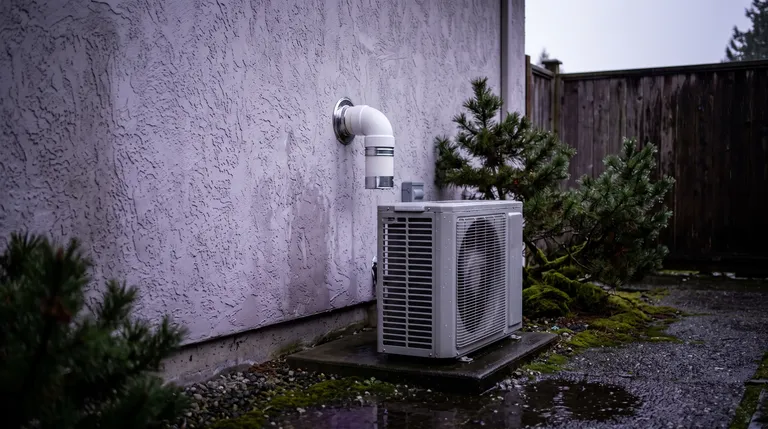
Radiant runs at lower water temperatures than radiators, and heat pumps are at their most efficient producing lower temperatures. The two suit each other unusually well, and a hydronic radiant system is one of the better candidates for a heat pump as its source.
If you are planning radiant in new construction or a deep renovation, that pairing is worth designing for.
The practical advice
If a floor is coming up for any reason, decide about radiant then. The incremental cost while the floor is open is a fraction of the cost of doing it as its own project, and the "we should have done it while the floor was up" conversation is one we have often.
Vancouver, Burnaby, Richmond, Coquitlam, Port Coquitlam, New Westminster. 604-865-7979.
Related: Radiant and in-floor heating · Boilers · Bathroom renovation plumbing