
Perimeter drainage is the part of this trade with the worst reputation, and it has earned some of it. A homeowner with a wet basement is anxious, cannot see the pipe, and has no way to check what they are told. That is a bad combination.
So here is the honest version of how the decision should be made.
The two jobs are not close in scale
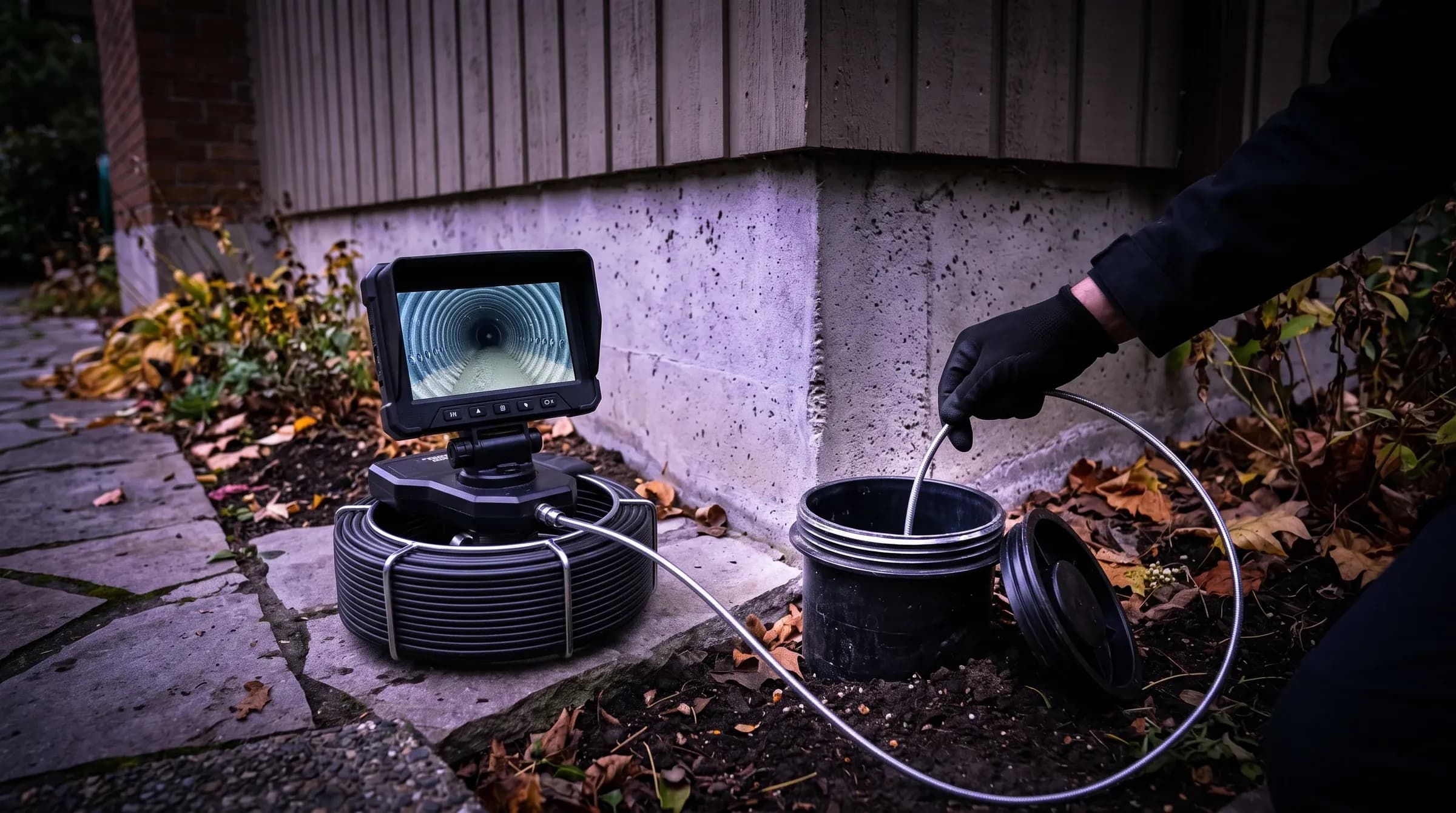
Flushing and cleaning clears silt, sludge and root material out of a line that is otherwise intact. It is done through access points, typically with jetting equipment, and there is no excavation.
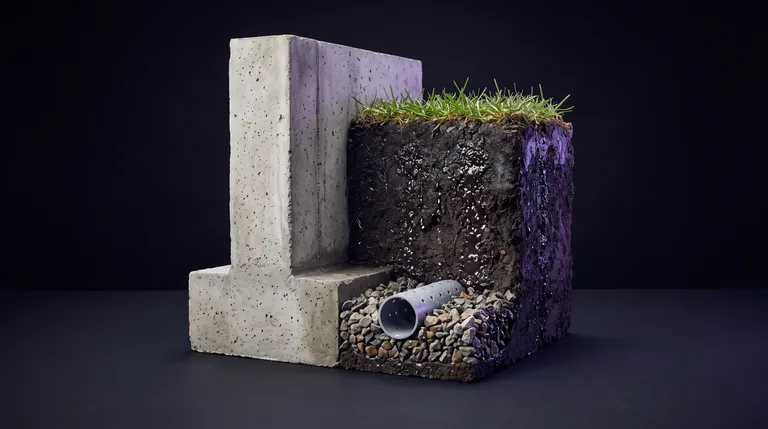
Replacement means excavating around the foundation, removing the old system, and installing new pipe, gravel and filter fabric. It is a substantial project involving heavy equipment, landscaping disruption, and days of work.
The gap between them is large. Which is exactly why the diagnosis has to be evidence-based.
The evidence is a camera
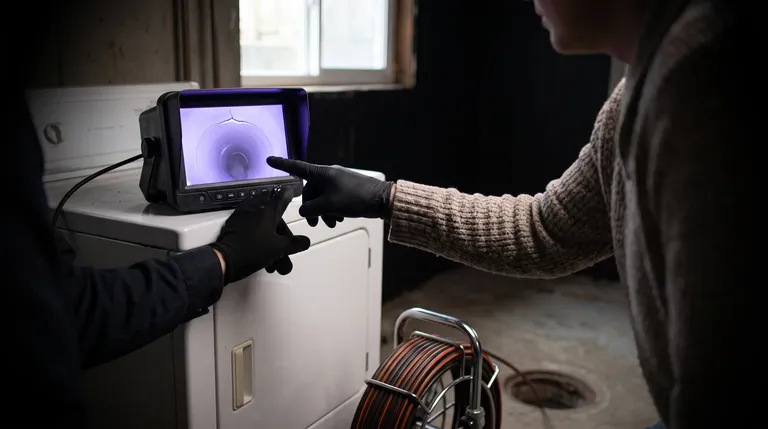
There is no way to know the condition of a buried pipe without looking inside it. A camera pass shows whether the pipe is intact or crushed, whether it is silted or root-filled, whether joints have offset, whether there are collapsed sections, and what the material is.
Sometimes the line has to be cleaned before a camera can see anything, which is legitimate — but that sequence should be explained, and the camera should still happen afterwards.
Ask to see the footage. Not a description of it. It is your pipe and it is your decision.
When flushing is the answer
The pipe is intact, the problem is accumulation, the line still has its shape and its slope. Silt and sludge come out, roots are cut and flushed, flow is restored.
Some systems are entirely sound and simply need flushing. That is not a consolation prize — it is a good outcome, and it is more common than the replacement quotes some homeowners receive would suggest.
Flushing also has a maintenance role. On a property with mature trees, roots come back, and a periodic flush keeps ahead of them. What interval suits your property depends on your property, and a camera can tell you.
When replacement is the answer
The pipe is crushed or collapsed. The material has failed and is breaking down. Joints have offset badly enough that the line no longer functions as a line. Root damage has destroyed sections rather than merely filled them. Or there is no functioning system at all, which happens in older houses.
Slope is another one. A system installed without adequate fall, or one where the ground has settled, will not drain regardless of how clean it is. Cleaning a line that cannot flow is a temporary result.
The middle case
Sometimes one section has failed and the rest is sound. Partial replacement of the failed run plus flushing the remainder is a legitimate answer, and it is worth asking about specifically — because it frequently is not offered.
Questions that separate a real assessment from a sales pitch
Can I see the camera footage. Where exactly is the problem, and how much of the perimeter is affected. Is the pipe structurally damaged or is it silted. What would flushing achieve, and how long would you expect it to last on this property. If we flush and it does not resolve it, what then. Is partial replacement an option.
A contractor who answers those clearly is one you can work with. A contractor who cannot show you the pipe but is confident it needs full replacement is telling you something about themselves.
What else to check first
Before assuming the perimeter drain, rule out the cheap causes: downspouts that have come apart or discharge at the foundation, ground sloping toward the house instead of away, window wells with no drainage, a blocked drain outlet or a failed sump pump.
Any of those produces a wet basement with a perfectly good perimeter drain. All are cheaper to fix.
On timing
Investigation is better done in a dry stretch than during the first serious rain, when every failing drain in the region becomes urgent at once. If your basement was damp last winter, this is the season to look rather than the season to wait.
Vancouver, Burnaby, Richmond, Coquitlam, Port Coquitlam, New Westminster. 604-865-7979.
Related: Perimeter drain cleaning and flushing · Perimeter drainage installation and replacement · Perimeter drains: what they do