
People are often surprised that leak detection is a separate thing you pay for. The instinct is that a plumber should arrive, look at the wet patch, and fix what is above it.
Sometimes that works. More often the wet patch is nowhere near the leak, and the difference between those two situations is most of the cost of the job.
Water does not fall straight down
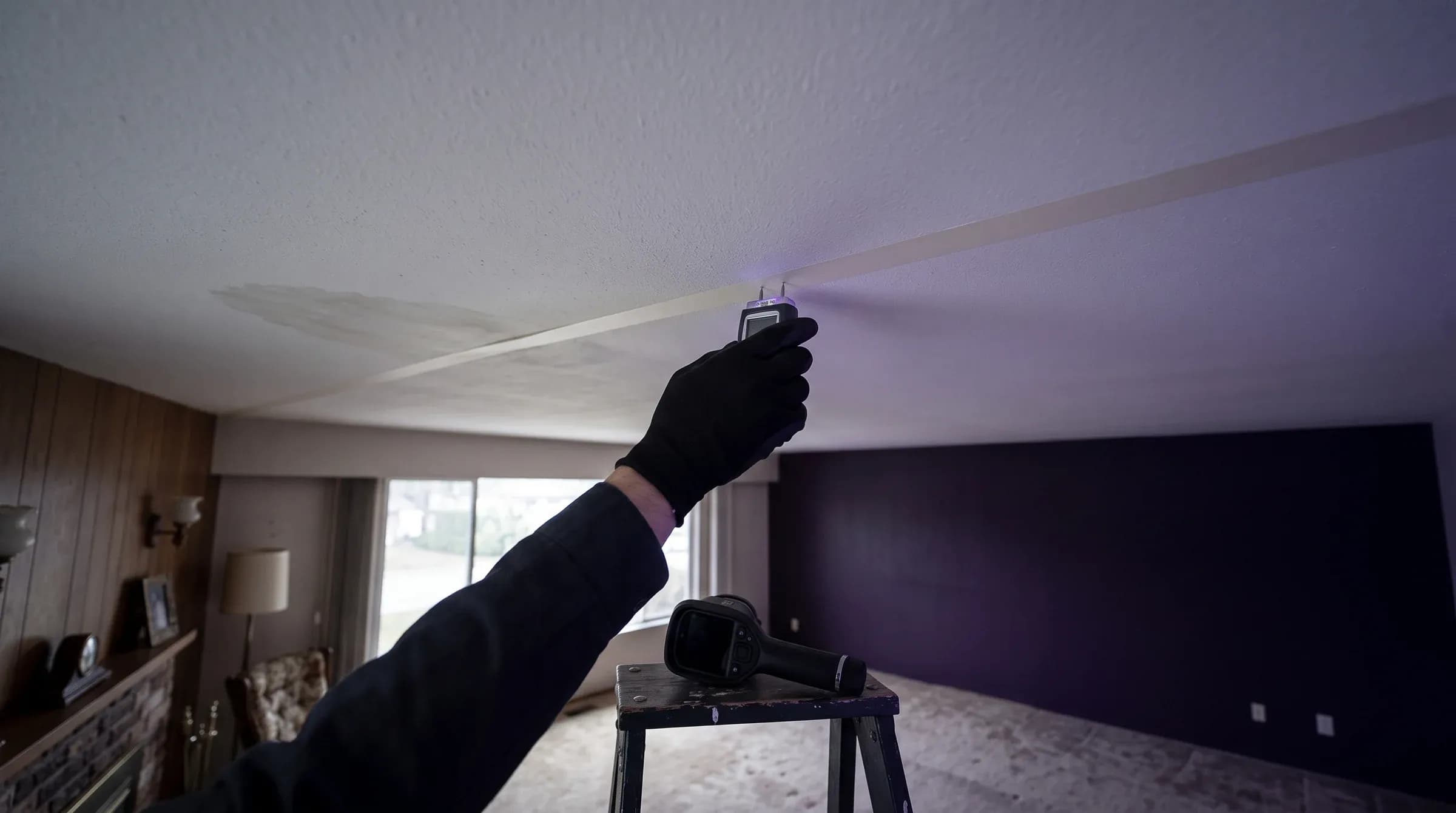
When a pipe leaks inside a wall or under a floor, the water does not drop neatly onto the surface below. It runs along the outside of the pipe until the pipe changes angle. It hits a joist and travels the length of it. It follows an electrical conduit. It soaks into insulation and moves through it slowly, then emerges wherever the assembly gives it an exit — a light fixture, a seam in the drywall, the top of a baseboard.
By the time you see it, the water may have moved several metres horizontally and down a storey. Opening the ceiling at the stain frequently reveals dry framing and no pipe at all.
So the first job is to narrow it down without opening anything
The tools are unglamorous but effective.
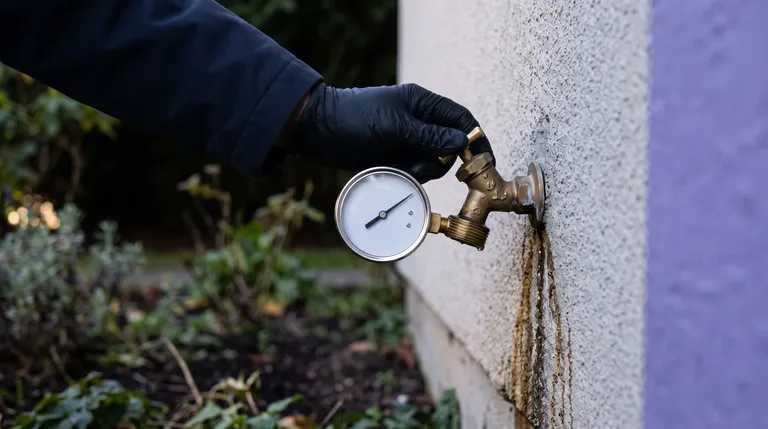
Isolation. Close valves section by section and watch the meter. If the meter stops when a branch is isolated, the leak is on that branch. This alone often halves the search area, and it costs nothing but time.
Acoustic listening. Pressurised water escaping through a small opening makes a specific sound, and ground microphones and contact probes hear it through concrete, tile and drywall. Moving across a floor and listening for where that sound peaks is often how a slab leak gets located to within a small area.
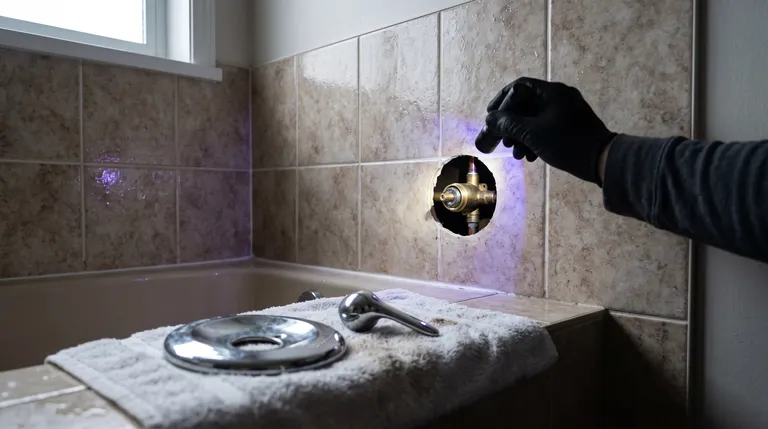
Thermal imaging. A hot water leak warms the material around it. A thermal camera shows the pattern — you can see the pipe run and the bloom around the failure. Cold water leaks show up too, as evaporative cooling.
Moisture meters. These map how wet the material actually is behind the surface, which is how you distinguish an old dried stain from something currently wet, and how you find the edges of a wet area.
Pressure testing. Isolate a section, pressurise it, and see whether it holds. A section that does not hold has the leak. A section that holds does not.
Camera inspection, where the problem is a drain rather than a supply line, because a drain leak behaves differently — it only leaks when something is draining, which is why some leaks appear once a day and vanish.
Why this beats opening the wall
The alternative to detection is investigative demolition: open where you think it is, and if it is not there, open somewhere else. Each opening is drywall, paint, tile, sometimes cabinetry, and each one has to be closed again. Two or three wrong guesses cost more than the search would have, and they leave a room in worse shape.
There is also a diagnostic value that is easy to overlook. Detection tells you not just where the leak is but what kind it is — a failed joint, a pinhole in a run, a fitting that was never right, corrosion. A pinhole in a copper line in a home of a certain age is often not a one-off; it is the first of several, and knowing that changes the conversation from "patch this" to "what is the plan for this system."
What it looks like on the day
We start with the meter and with questions: when does it appear, has it changed, is it worse when something specific runs. Then isolation to narrow the area, then the listening and imaging work to pin it down. Then we tell you where it is, what we think caused it, and what the repair involves — before anything gets opened.
If access is needed, it is one opening, in the right place, sized to the work.
When detection is not needed
If a supply line under a sink is dripping visibly onto the cabinet floor, that is a repair, not an investigation. Detection earns its place when the leak is concealed — behind a wall, under a slab, above a ceiling, underground between the meter and the house.
If you are not sure which situation you are in, describe it on the phone and we will tell you. 604-865-7979.
Related: Leak detection and repair · The signs of a hidden leak · Whole-home and suite repiping