
When an underground line has to be replaced — a water service or a sewer lateral — there are two broad ways to do it, and people usually assume the choice is about the pipe.
It is not. It is about the surface.
Open trench
Dig along the line, take the old pipe out, put the new one in, backfill, restore the surface.
It is the oldest method and it has real advantages: everything is visible, so anything unexpected is dealt with directly; the new line can be rerouted if the old path was poor; and where the surface is grass, it is the cheapest option by a distance.
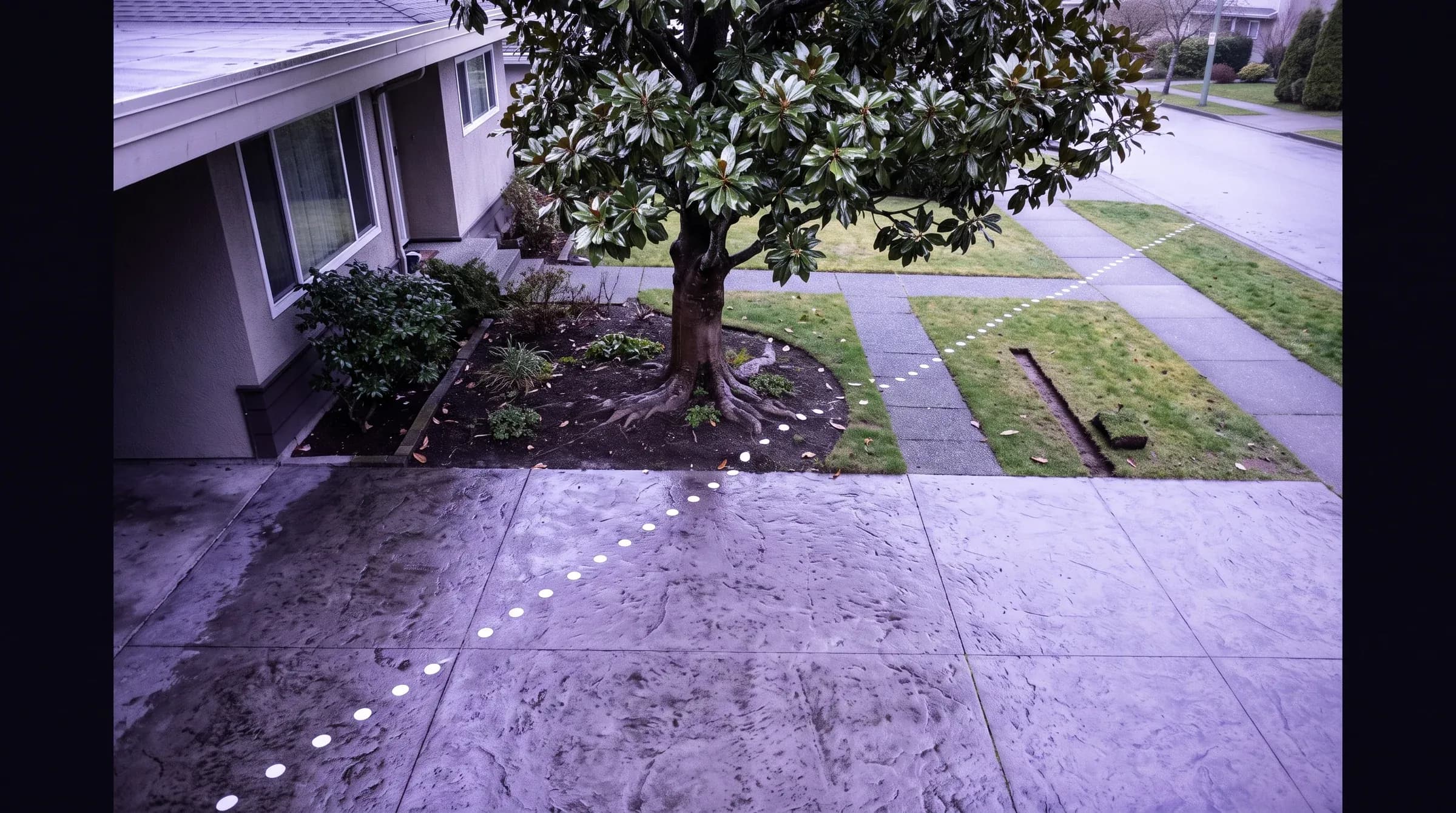
The cost is entirely in what is on top. A lawn is straightforward. A driveway means cutting concrete or asphalt and replacing it. Mature landscaping, a retaining wall, a patio, a mature tree — those are the things that make an open trench expensive, and often the restoration exceeds the plumbing.
Trenchless
Access pits at each end rather than a continuous trench, and the new line is either pulled through the existing path or the old pipe is burst outward and the new one drawn in behind it.
The advantage is obvious: the surface between the pits is largely undisturbed. Driveways, patios and gardens survive.
The constraints are less obvious. The existing line has to be usable as a path — a collapsed or badly misaligned pipe may not be. Soil conditions matter. There has to be room for the pits at each end, which in a tight urban lot is not guaranteed. And other buried services near the line change what is safe to do.
The honest comparison
Per metre of pipe, trenchless usually costs more. Total job cost depends almost entirely on the surface.
Under a lawn, open trench usually wins. Under a concrete driveway or established landscaping, trenchless frequently wins, and sometimes by a lot. If the existing line is collapsed or badly offset, trenchless may not be available at all, and if access at either end is impossible it definitely is not.
What is on top of your line
Most people do not know where their service line runs. It is worth finding out, because it determines everything about the eventual cost. A camera inspection or a line locate answers it and also tells you the condition of what is there.
If a driveway or a patio is planned over the top of an old line, that is the moment to think about it — replacing the line first, while the surface is already coming up, is dramatically cheaper than doing it afterwards.
The city end
Where the work reaches the boulevard or the road allowance, the municipality is involved: permits, inspections, restoration standards, and sometimes their own crew for the portion in the road. That coordination affects the schedule more often than the digging does.
What you should ask for
A quote that tells you which method, why, what the surface restoration includes and what it excludes, and what happens if the trenchless approach is attempted and the line turns out to be unusable. That last one is the question that separates a real quote from an optimistic one.
We do this work across Vancouver, Burnaby, Richmond, Coquitlam, Port Coquitlam and New Westminster. 604-865-7979.
Related: Water line and main replacement · Trenchless sewer repair · Signs your water main is failing