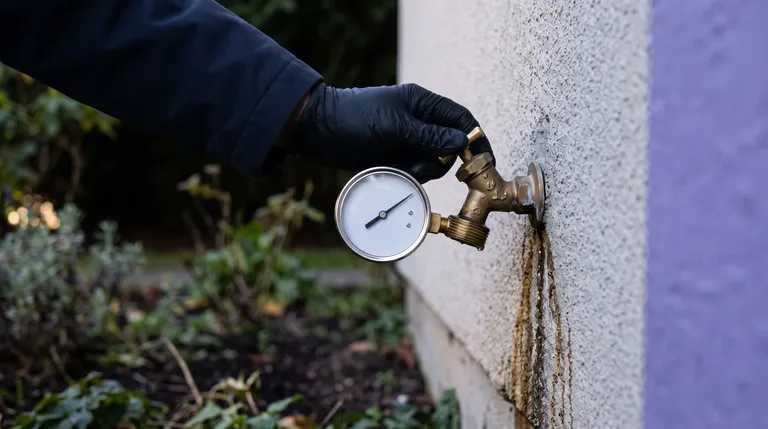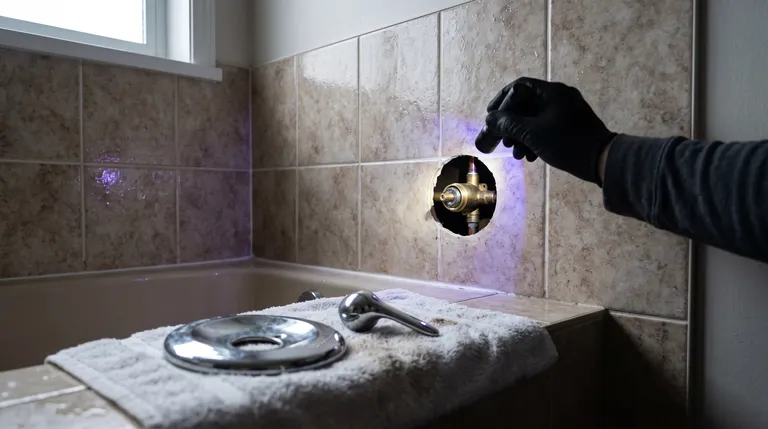

Nobody repipes a house because one pipe failed. They repipe because the pattern became undeniable — and the pattern is usually visible well before that point.
The signals, roughly in order of how much they should worry you
Repeat pinhole leaks. This is the clearest one. A single pinhole in a copper line can be bad luck — a manufacturing flaw, an odd water condition in one spot. Two is a pattern. Three means the system is failing generally and you are now in a cycle of patching a pipe that is going to fail again somewhere else.
The reason this matters is arithmetic. Each individual repair is small. Ten of them, plus the drywall and the paint and the day off work and the one that happened while you were away, is not small at all.
Discoloured water, particularly first thing in the morning or after the house has sat empty. Brownish or rust-tinted water that clears after running is corrosion products coming off the inside of the pipe. It is not usually dangerous, but it tells you what the inside of your pipes looks like.
Pressure that has declined across the whole house. Not one fixture — the whole system. Mineral scale and corrosion narrow the interior of a pipe over decades, and the effective diameter shrinks. This happens slowly enough that people adjust to it.
Pipe material and age. Some materials have a known history, and the two that matter most here are Poly-B, which is common in BC homes from a particular era, and galvanised steel in older houses. Both have well-documented failure patterns.
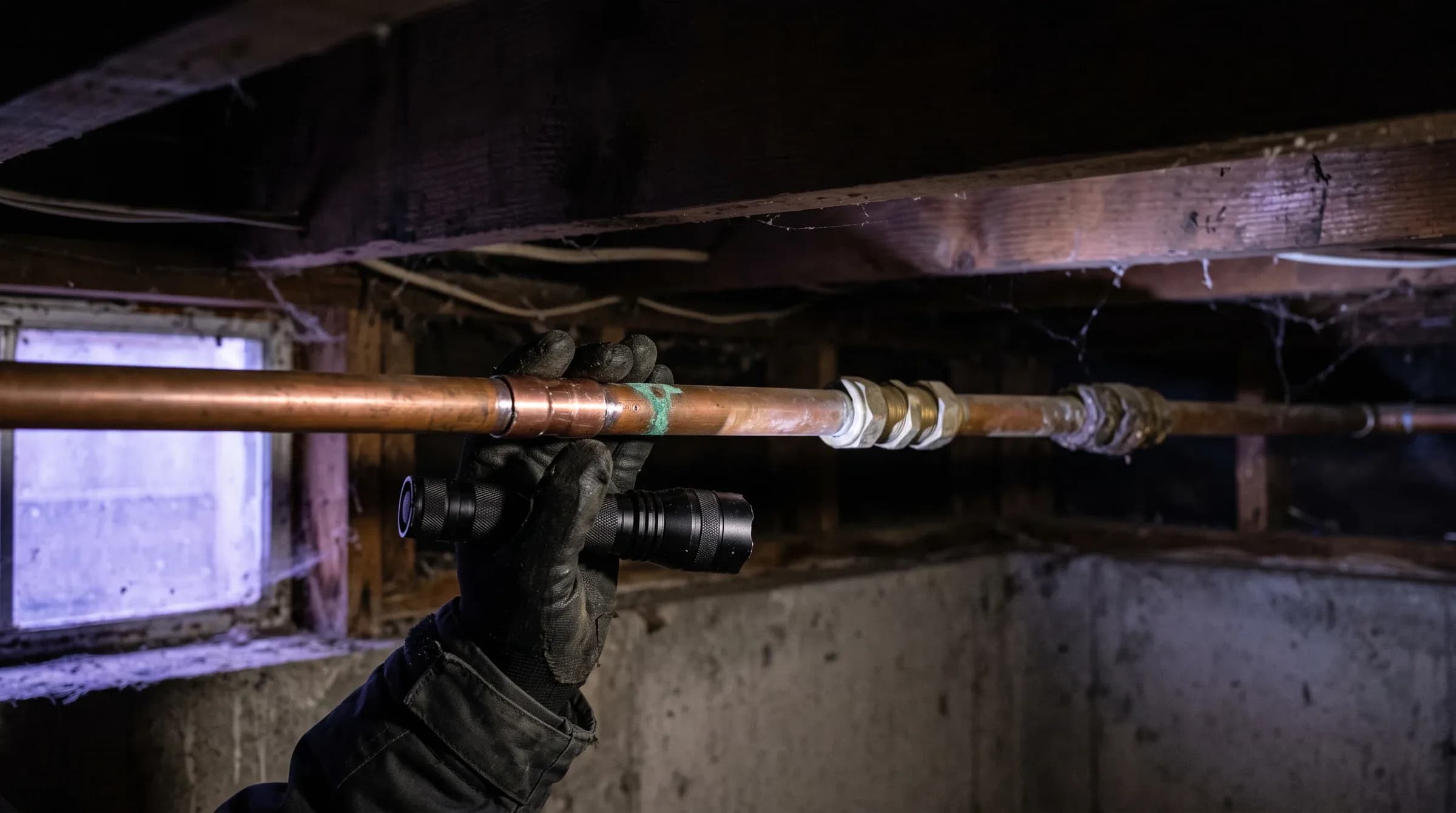
Visible corrosion at joints — green or white crust on copper, rust staining on steel — is the system telling you where it is losing the fight.
An insurance conversation. If your insurer has started asking about your plumbing, or adjusting terms because of it, that is a market signal about risk that is worth taking seriously.
Why waiting is usually the expensive choice
The comparison people make is repiping now against not repiping now, and on that comparison waiting always wins.
The real comparison is repiping now, on a schedule you choose, against repiping later after a series of leaks — each with its own repair, its own drywall, its own paint, possibly its own water damage and insurance claim, and one of which will happen at the worst possible time.
Planned work is also simply less disruptive. You can schedule it, arrange to be away, coordinate it with a renovation you were going to do anyway. Emergency work happens when it happens.
What repiping does and does not include
It replaces the supply lines — the pipes bringing water to your fixtures. It does not normally replace drains, which are a separate system with a separate life expectancy.
It means opening walls and ceilings to reach the runs, and the extent depends on the layout of your home and how the original plumbing was routed. Modern practice minimises openings by planning the routes carefully, but there is no version of this that does not involve some drywall.
Repair of those openings — drywall, paint, tile — is usually a separate scope, and you should be clear before work starts about who is doing it and whether it is in the quote.
What decides the size of the job
Number of bathrooms and fixtures, more than square footage. Every fixture is a run. Whether the home is one storey or several, because vertical runs are their own problem. Whether it is a detached house, a townhouse or a condo suite — a suite is smaller but has building constraints a detached house does not. And access: an open crawlspace or unfinished basement makes a large difference against fully finished spaces.
The honest answer about timing
If you are having repeat leaks, the decision is made and it is only a question of when. If you have one of the materials with a known failure history, it is worth planning for before it is urgent. If your only symptom is that the house is old, get it looked at rather than assuming.
We will tell you what we find, including if what we find is that your system has years left in it.
Vancouver, Burnaby, Richmond, Coquitlam, Port Coquitlam, New Westminster. 604-865-7979.
Related: Whole-home and suite repiping · Poly-B pipe replacement · What repiping is like to live through