
Places with proper winters build for it. Pipes run on interior walls, crawlspaces are sealed and heated, and everyone knows to disconnect the hose in October because everyone's parents did.
Metro Vancouver does not have that winter, and that is precisely the problem. We get a handful of hard cold snaps, they arrive suddenly, and they land on housing stock that was built and renovated on the assumption they would not.
Where it actually happens
Almost never in the middle of the house. Freezing happens at the edges — the places where a pipe runs through a space that is not really inside.
Crawlspaces are the biggest single source. Many are vented to the outside by design, for moisture control, which means their temperature tracks the outdoors. A supply line running through a vented crawlspace is effectively outdoors.
Garages, particularly where a laundry, a utility sink or a water heater has been added. The garage is unheated, the door opens and closes, and a pipe that was fine for years meets its first genuinely cold night.
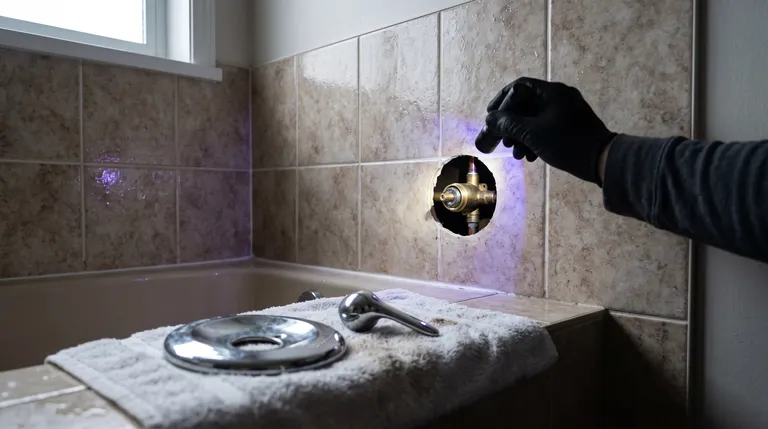
Exterior walls, especially where a kitchen or bathroom was moved during a renovation and the new plumbing was run through the outside wall because that was the convenient route. There is often insulation between the pipe and the interior, and nothing between the pipe and the outside — which is backwards.
Attic runs, which show up in homes where a suite or a bathroom was added upstairs.
Outdoor taps, the most common of all, and the easiest to prevent.
The hose is the classic
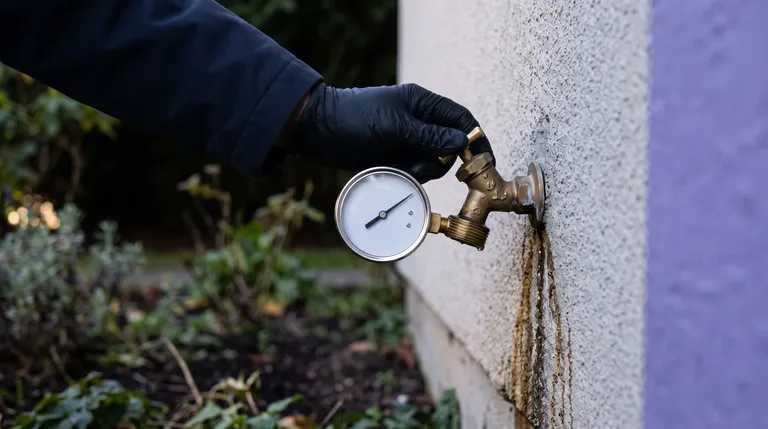
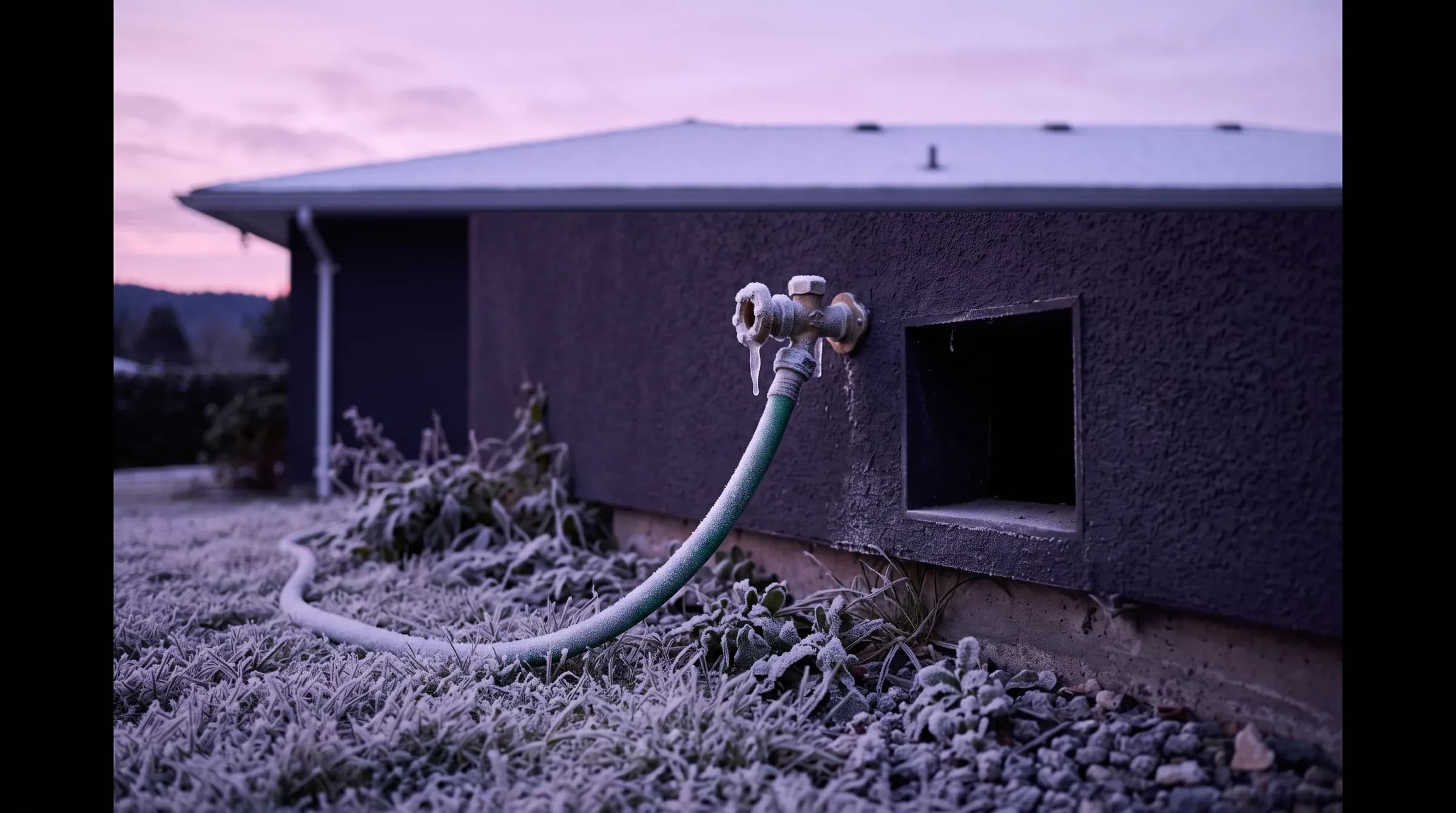
An outdoor tap with a hose still attached cannot drain. Water sits in the tap body and in the first section of pipe inside the wall. When it freezes it expands, and the split is usually not at the tap where you would see it — it is a few inches inside the wall.
The cruel part is that you often do not find out in winter. The split sits there frozen and sealed. In spring, the first warm day, somebody turns on the tap to wash the car and water goes into the wall cavity instead.
Disconnect hoses before the first cold snap. If you have interior shutoffs for the outdoor taps, close them and open the outdoor tap to let it drain. That is the whole procedure.
What to do when a cold snap is forecast
Open the cupboard doors under sinks on exterior walls so household heat reaches the pipes. Leave a tap running at a slow trickle on the run you are most worried about — moving water is much harder to freeze, and the trickle also relieves the pressure that actually splits pipes. Keep the heat on if you are away, and set it to a temperature that keeps the whole house above freezing rather than just the rooms you use.
If you have a crawlspace with vents that can be closed seasonally, close them — but understand this is a moisture trade-off and reopen them in spring.
If a pipe is already frozen
You will know because a tap gives you nothing, or a trickle, while other taps run normally. That means the blockage is on that branch.
Do not use an open flame. Torches on pipes inside walls have caused house fires, and it is one of the most common ways a manageable problem becomes a catastrophic one.
Open the tap the frozen section feeds — this gives melting water somewhere to go and relieves pressure. Apply gentle heat to the accessible section if you can reach it: a hairdryer, a heat gun on low, warm towels. Work from the tap end back toward the frozen section, not the other way, so the meltwater has an exit.
And know where your shutoff is, because a frozen pipe may already be split. The split is invisible while it is frozen. The moment it thaws, it releases.
Afterwards, ask why
A pipe that froze once will freeze again, because whatever made that spot cold is still there. The useful work after a thaw is not just the repair — it is deciding whether the run should be insulated, rerouted, heat-traced, or whether that crawlspace vent should be closed each winter.
That conversation costs nothing and prevents the same call next year.
We work across Vancouver, Burnaby, Richmond, Coquitlam, Port Coquitlam and New Westminster. 604-865-7979.
Related: Frozen pipe thawing and repair · Burst pipe repair · A pipe burst — what happens next