
There is a particular kind of anxiety that comes with a plumbing problem at night. Something is wrong, you cannot tell how wrong, and every hour it sits feels like it might be making it worse.
Sometimes it is. Often it is not. Here is how to tell.
It is an emergency if water is escaping and you cannot stop it
This is the whole test, and everything else is a variation on it.
Water that is actively escaping into the structure of your home — through a ceiling, into a wall, across a finished floor, into a crawlspace — is doing damage continuously. Every hour is more drywall, more flooring, more insulation, and eventually mould. If you cannot shut it off at a fixture or at the main, that is a call now, whatever time it is — and what to do in the first five minutes sets out the order that helps while you wait.
Sewage backing up into the home is the same answer for a different reason. That is a health problem as much as a plumbing one, and it does not improve overnight.
No heat in a genuine cold snap belongs on this list too, particularly if there is an infant, an elderly person, or someone unwell in the house. And a gas smell is not a plumbing call at all — leave, then call FortisBC's emergency line from outside.
It can usually wait if you have contained it
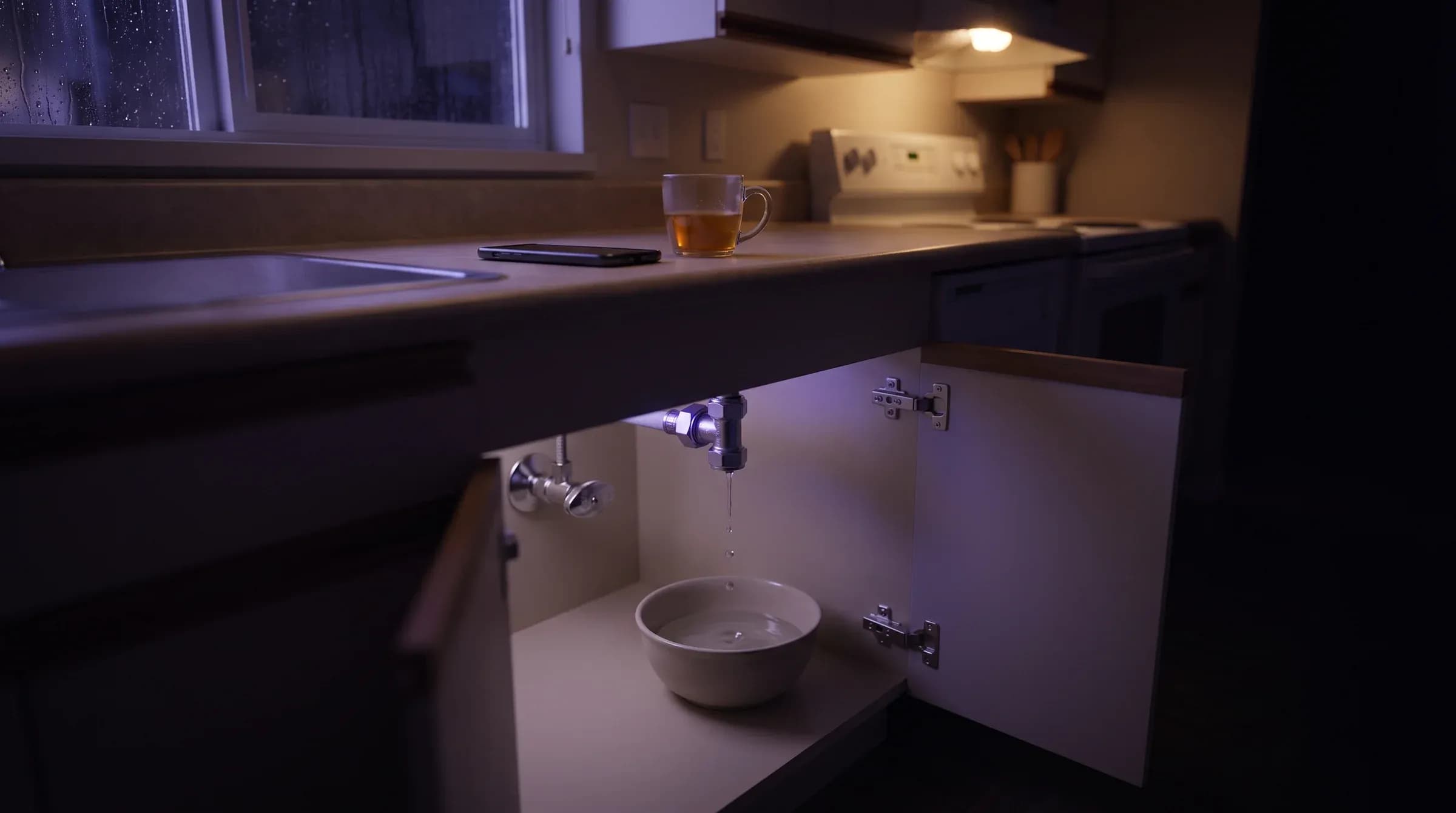
If you have shut the water off to the affected fixture and the rest of the home still works, you have converted an emergency into an appointment. A leaking toilet supply with the valve closed is a job for tomorrow. A dripping tap is a job for next week.
A single slow drain, with the other drains running normally, is almost always a local blockage and almost never urgent. A water heater that has stopped producing hot water is miserable but not damaging — unless it is leaking from the tank body, which is different, because that means the tank has failed and it will not stop on its own.
The pattern is: contained and not spreading can wait. Spreading cannot.
The ones people get wrong in both directions
Underestimated: multiple slow drains. One slow drain is a local clog. Every drain in the house running slowly, or a toilet that bubbles when the washing machine empties, means the problem is further down — the main line. That is not urgent tonight, but it is not a plunger job either, and it tends to become an emergency at the least convenient moment.
Underestimated: the small ceiling stain. A brown ring on a ceiling that has not grown in months is still a leak. Something is wet up there. It is not an emergency, but it is not nothing, and it is much cheaper to open one square foot of ceiling deliberately than to wait for the section that has been quietly rotting.
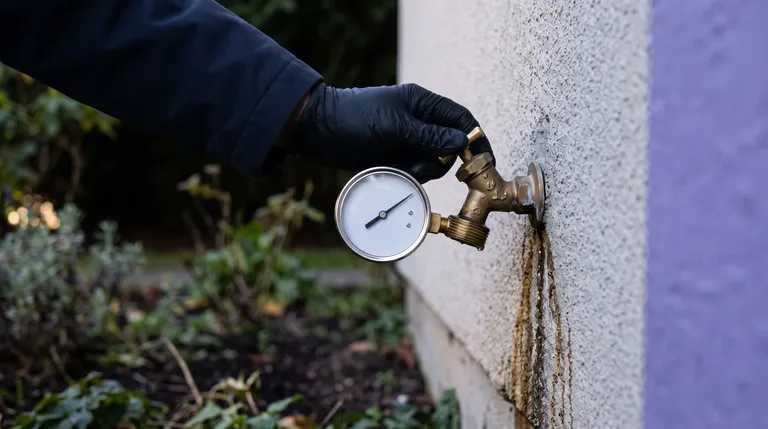
Overestimated: a burst outdoor tap in winter. Unpleasant, and it needs fixing, but if you can shut it off inside, the emergency is over.
Overestimated: the toilet that will not flush, when there is another toilet in the house. Inconvenient. Not urgent.
Why calling at night is sometimes the cheaper decision
People wait until morning to avoid an after-hours call, and sometimes that is exactly right. But if water is moving, the arithmetic usually runs the other way. Six hours of water into a floor assembly is a restoration job — drying equipment, opened walls, an insurance claim, weeks of disruption. The plumbing repair is often the small part of that.
The honest guidance is: if it is spreading, call. If it is contained, sleep, and call in the morning when it will be a shorter and simpler visit.
If you are not sure
Call and describe it. We would much rather have a two-minute conversation at eleven at night that ends in "close that valve and we will see you tomorrow" than arrive to a floor that has been wet since midnight.
604-865-7979, any hour, across Metro Vancouver.
Related: Emergency plumbing · What to do in the first five minutes · Drain cleaning